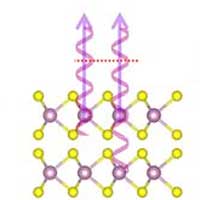
 Scientists have taken a step closer to the goal of controlling light by identifying nonlinear optical phenomena occurring in heterobilayers composed of two-dimensional materials.

Thursday, December 17, 2020
2D material controls light twice stronger
Scientists have taken a step closer to the goal of controlling light by identifying nonlinear optical phenomena occurring in heterobilayers composed of two-dimensional materials.

Ultra-thin designer materials unlock quantum phenomena
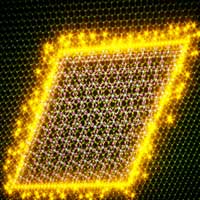 A team of theoretical and experimental physicists have designed a new ultra-thin material that they have used to create elusive quantum states. Called one-dimensional Majorana zero energy modes, these quantum states could have a huge impact for quantum computing.
Ultracold atoms reveal a new type of quantum magnetic behavior
 A new study illuminates surprising choreography among spinning atoms: Researchers reveal how magnetic forces at the quantum, atomic scale affect how atoms orient their spins.
Catalyst research: Molecular probes require highly precise calculations
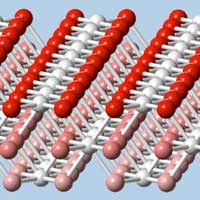 Scientists have demonstrated the use of calculation methods with so-called hybrid functionals for the reliable interpretation of experimental data.
Polariton interactions: Light matters
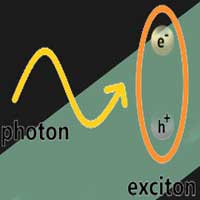 Why do two-dimensional exciton-polaritons interact? The answer is found to lie in the 'light-like' characteristics of these quasiparticles. This is important for future applications using polaritons in atomically-thin semiconductors, such as ultra-low energy electronics.
Organic molecules on a metal surface... a machinist's best friend
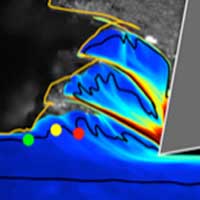 How can you improve the cutting of 'gummy' metals? Engineers have come up with an answer - and their findings may help in manufacturing products and reducing component failures.
Wednesday, December 16, 2020
Quantum insulators create multilane highways for electrons
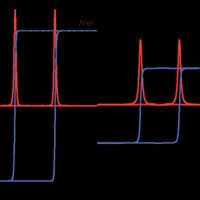 Researchers have experimentally realized the quantum anomalous Hall effect in a multilayered insulator, essentially producing a multilane highway for the transport of electrons that could increase the speed and efficiency of information transfer without energy loss.
Subscribe to:
Posts (Atom)