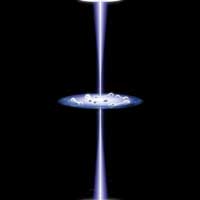
 Phase transitions describe dramatic changes in properties of a macroscopic system - like the transition from a liquid to a gas. Starting from individual ultracold atoms, physicists were able to observe the emergence of such a transition with an increasing number of particles.

Saturday, December 12, 2020
Two, six, many - physicists observe the emergence of collective behaviour
Phase transitions describe dramatic changes in properties of a macroscopic system - like the transition from a liquid to a gas. Starting from individual ultracold atoms, physicists were able to observe the emergence of such a transition with an increasing number of particles.

Researchers find a better way to design metal alloys
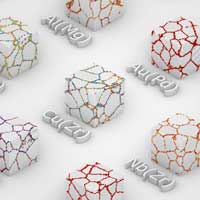 System uses machine learning to analyze boundaries between crystal grains, allowing for selection of desired properties in a new metal.
Researchers create MRI-like technique for imaging magnetic waves in ultrathin magnets
 The MRI system made by the researchers makes use of a special lattice defect in the crystal structure of diamonds. This defect - known as nitrogen-vacancy centre - enables high-resolution imaging of the magnetic structure of a sample.
Friday, December 11, 2020
Nanosensors embedded in living plants detect arsenic
 Researchers have developed a living plant-based sensor that can in real-time detect and monitor levels of arsenic, a highly toxic heavy metal, in the soil.
Faraday fabrics with MXene coatings?
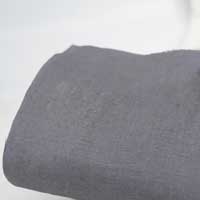 MXene-coated fabric could contain electronic interference in wearable devices.
Artificial visual system of record-low energy consumption for the next generation of AI
 Researchers have built an ultralow-power consumption artificial visual system to mimic the human brain, which successfully performed data-intensive cognitive tasks. Their experiment results could provide a promising device system for the next generation of artificial intelligence (AI) applications.
Trapping nanoparticles with optical tweezers
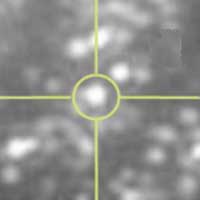 By exploiting a particular property of light diffraction at the interface between a glass and a liquid, researchers have demonstrated optical tweezers capable of trapping nanoparticles.
Subscribe to:
Posts (Atom)