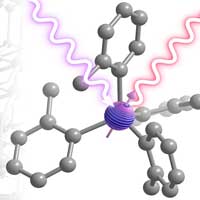
 An interdisciplinary team of chemists and physicists has developed a new method to create tailor-made qubits: by chemically synthesizing molecules that encode quantum information into their magnetic, or 'spin', states.

Tuesday, December 8, 2020
In new step toward quantum tech, scientists synthesize 'bright' quantum bits
An interdisciplinary team of chemists and physicists has developed a new method to create tailor-made qubits: by chemically synthesizing molecules that encode quantum information into their magnetic, or 'spin', states.

Batteries mimic mammal bones for stability
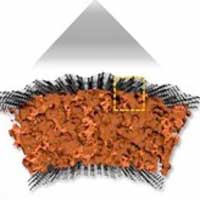 By copying the multilayer geometry of mammal bones, cathodes for sodium-ion batteries can be made more structurally stable, while maintaining high capacities and fast charge rates.
Nanospindles enhance use of ultrasound to fight cancer
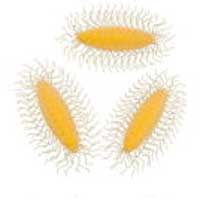 Nanoscale vanadium-doped titanium dioxide spindles sensitize cancerous tumors to ultrasound waves, markedly suppressing tumor growth.
New method to label and track nanoparticles could improve our understanding of plastic pollution
 A ground-breaking method to label and track manufactured nano-plastics could signal a paradigm shift in how we understand and care for environments.
Adding silver to nanoclusters can do wonders for their luminescence
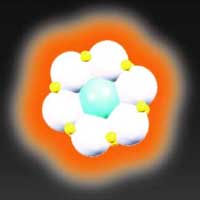 Researchers have discovered that a silver-doped platinum thiolate nanometal complex shows 18-fold greater photoluminescence than the original platinum complex.
Novel holey nanosheets for detecting hydrogen gas leaks
 Scientists develop hydrogen sensors with holey zinc oxide nanosheets, which has high sensitivity and fast response time, to prevent accidents from hydrogen gas leaks.
A molecule like a nanobattery
 How do molecular catalysts function, and what effects do they have? A team of chemists has come closer to the answers using a model molecule that functions like a molecular nanobattery.
Subscribe to:
Posts (Atom)