 Researchers used a scanning tunneling microscope to visualize quantum dots in bilayer graphene, an important step toward quantum information technologies.

Monday, November 23, 2020
Direct visualization of quantum dots reveals shape of quantum wave function
Researchers used a scanning tunneling microscope to visualize quantum dots in bilayer graphene, an important step toward quantum information technologies.

World's smallest atom-memory unit created
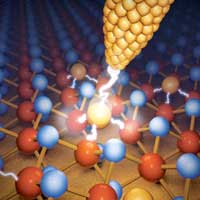 Faster, smaller, smarter and more energy-efficient chips for everything from consumer electronics to big data to brain-inspired computing could soon be on the way after engineers created the smallest memory device yet.
Self-diagnostic carbon nanocomposites
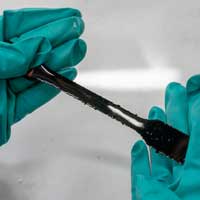 Researchers have created multifunctional materials through the addition of carbon nanoparticles to polymer matrices, designed to allow self-diagnostic monitoring through an inexpensive technique.
Researchers overcome barriers for bio-inspired solar energy harvesting materials
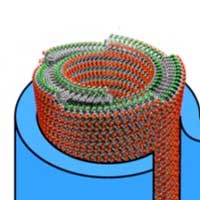 Inspired by nature, researchers demonstrate a synthetic strategy to stabilize bio-inspired solar energy harvesting materials. Their findings could be a significant breakthrough in functionalizing molecular assemblies for future solar energy conversion technologies.
Vibrational encounters - phonon polaritons meet molecules
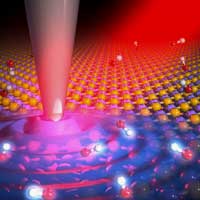 Scientists have employed a spectroscopic nanoimaging technique to study how infrared nanolight and molecular vibrations interact with each other. The images reveal that vibrational strong coupling can be achieved, which is a phenomenon that recently attracts wide attention for its potential use to control fundamental physical and chemical material properties.
Strain engineering of 2D semiconductors and graphene
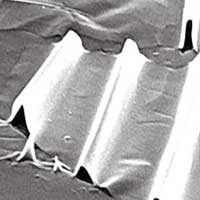 Strain engineering can significantly manipulate the two-dimensional (2D) materials' electronic and optical properties, which endow it the potential applications in optoelectronics and nanophotonics.
Researchers find conformational disorder tuning charge carrier mobility in 2D perovskites
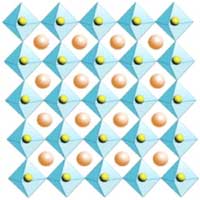 Researchers have synthesized a series of 2D organic-inorganic hybrid perovskites films with large organic spacer cations, and found that mobility and broadband emission showed strong dependence on the molecular conformational order of organic cations.
Subscribe to:
Posts (Atom)