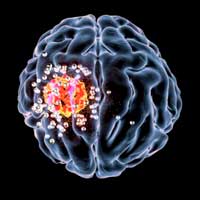
 Scientists describe a small carbon nanoparticle engineered by the two labs that could both deliver chemotherapy drugs across the blood-brain barrier and mark tumor cells with fluorescence in mice. What's more, this nanoparticle is incredibly simple - made up of only one single compound.

Wednesday, April 8, 2020
Nanoparticles offer large potential for brain cancer treatment
Scientists describe a small carbon nanoparticle engineered by the two labs that could both deliver chemotherapy drugs across the blood-brain barrier and mark tumor cells with fluorescence in mice. What's more, this nanoparticle is incredibly simple - made up of only one single compound.

Researchers present revolutionary light-emitting silicon
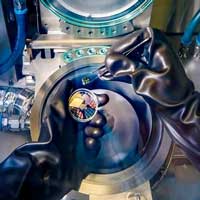 Researchers have developed an alloy with silicon that can emit light.
New 'refrigerator' super-cools molecules to nanokelvin temperatures
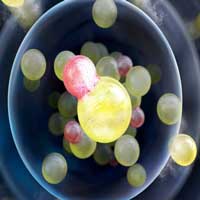 Technique may enable molecule-based quantum computing.
Nanodiagnostics for early stage disease detection
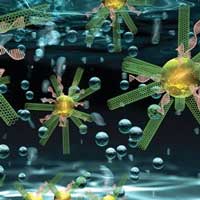 Researchers used nanotechnology in biomedical diagnostics - a process called nanodiagnostics - to create a new, ultrasensitive DNA biosensor. The new sensor could potentially detect DNA-based biomarkers for early diagnosis of cancer and genetic disorders, as well as monitor patient responses to therapies.
Harnessing the power of electricity-producing bacteria for programmable biohybrids
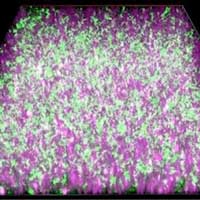 Researchers have developed a material that enabled them to create a programmable biohybrid system that conducts electrons from electricity-producing (exoelectrogenic) bacteria.
A step ahead in the race toward ultrafast imaging of single nanoclusters
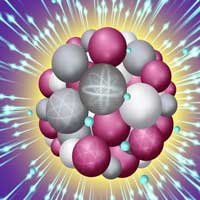 Using a combination of experimental and computational data, researchers discover paths to optimize pulses from highly intense X-ray beams.
Tracking the atomic pathways by in-situ liquid cell TEM
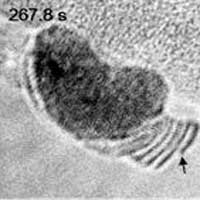 Technical advantages of in-situ liquid electron microscopy allow us to monitor the growth trajectory of pure metal nanoparticles in liquid media, including nucleation growth, nanorod self-assembly, and electrochemical deposition.
Subscribe to:
Posts (Atom)