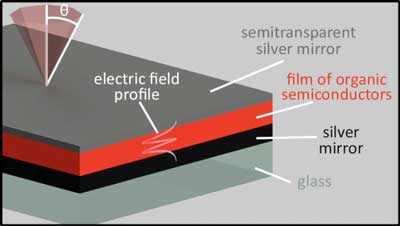
 Researchers found a way to keep these organic semiconductors from going dark. They used tiny sandwich structures of mirrors, called microcavities, to trap light and force it to interact with a layer of molecules, forming a new hybrid state, known as a polariton, that mixes light and matter.This approach could lead to brighter, more efficient LEDs, sensors and solar cells.

Friday, December 6, 2019
Microcavities save organic semiconductors from going dark
Researchers found a way to keep these organic semiconductors from going dark. They used tiny sandwich structures of mirrors, called microcavities, to trap light and force it to interact with a layer of molecules, forming a new hybrid state, known as a polariton, that mixes light and matter.This approach could lead to brighter, more efficient LEDs, sensors and solar cells.

A new view for glasses
 Scientists used computer simulations to demonstrate how the dynamics of a glassy liquid can be predicted based on the local structural ordering at the atomic level. This work may lead to a deeper understanding of glass transition.
Thursday, December 5, 2019
Ultrafast x-ray optics
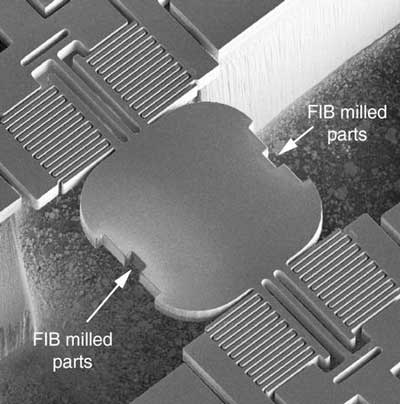 Scientists have demonstrated a new micro-electro-mechanical-system (MEMS) resonator. By using this device with a hard (higher energy) X-ray, scientists can now control how long the X-ray pulses are, down to 300 picoseconds long.
Super nanoparticle superlattices
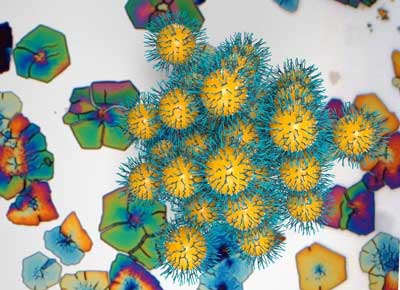 Nanoparticle superlattices have properties that are different from both the individual particles and the bulk material. Ions and molecules called ligands bind particles together in these superlattices. New research shows how the ligands affect key structural and mechanical properties of the superlattices.
Anticipation of regulatory needs for nanotechnology-enabled health products
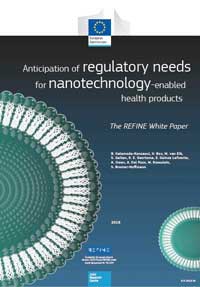 This new white paper, published by the European Commission, summarizes the major challenges associated with the regulation of the nano-enabled health products.
Researchers discover potential key to extremely low-friction surfaces
 Researchers studied friction of a graphene step edge using atomic force microscopy.
Smart, self-powered patch against corrosion
 Researchers are developing a smart patch that can cut huge amounts off the costs of rust.
Subscribe to:
Posts (Atom)