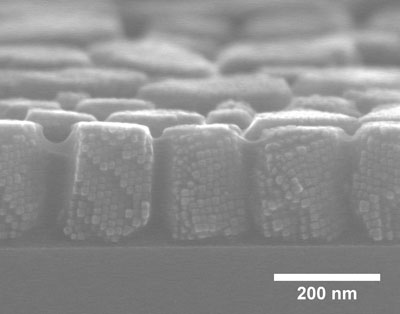
 The strength of the supercrystals in combination with their enhanced magnetic properties will be key to developing future uses, which could span everything from applications for the automotive industry to information technology.

Thursday, November 14, 2019
Super-strong magnetic supercrystals can assemble themselves
The strength of the supercrystals in combination with their enhanced magnetic properties will be key to developing future uses, which could span everything from applications for the automotive industry to information technology.

Scientists design built-in controls for mini-chemical labs on a chip
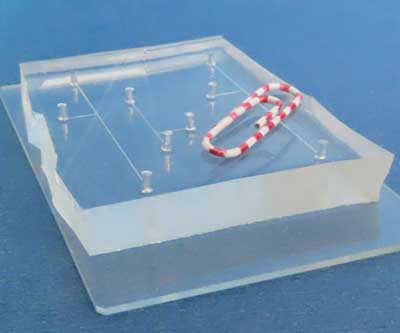 Researchers share their discovery of a way to program built-in controls in a microfluidic network.
Novel nanostructures could make smartphones more efficient
 Researchers are pushing the boundaries of the laws of physics, developing nanocomposite materials and nanoelectronic circuits to greatly improve energy, thermal and computing performance. This could make smartphones and other electronics more efficient and boost the potential of solar power.
Carbon nanotubes open new horizons for neuroscience: controlling neural cell outgrowth
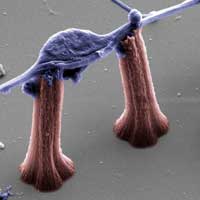 Researchers demonstrate that carbon nanotubes can be used to control the direction of neural cells growth.
Wednesday, November 13, 2019
Rational transparent conductor design provides a boost to carbon nanotubes application
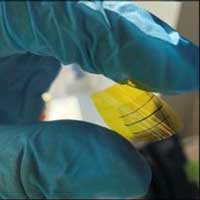 Researchers have rationally designed a novel p-type flexible transparent conductor using single-walled carbon nanotubes. This opens new avenues for its applications in next generation opto-electronics and energy technologies.
Graphene: The more you bend it, the softer it gets
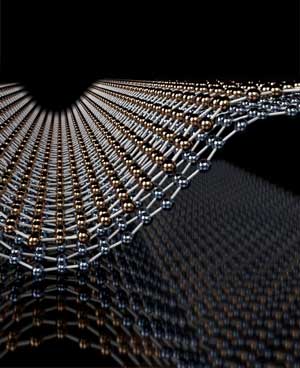 New research by combines atomic-scale experimentation with computer modeling to determine how much energy it takes to bend multilayer graphene - a question that has eluded scientists since graphene was first isolated.
Researchers develop thin heat shield for superfast aircraft
 Researchers are developing a design for a heat shield that better protects those extremely fast machines.
Subscribe to:
Posts (Atom)