

Thursday, February 21, 2019

With nanopore sensing, physicists detect subtle changes in single particles

The researchers' findings open the door to observe all kinds of interesting phenomenon on nanosurfaces, an area of great interest to chemists.

More flexible nanomaterials can make fuel cell cars cheaper

A new method of increasing the reactivity of ultrathin nanosheets, just a few atoms thick, can someday make fuel cells for hydrogen cars cheaper.

Design principles for disease-sensing nanomaterials
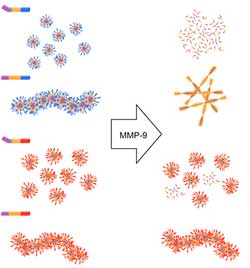
The detailed findings in a new paper could lead to more precise, effective methods of treating and diagnosing a variety of diseases, including cancers.

Gold nano-stars for intracellular delivery
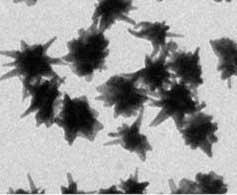
Researchers have developed a new method for star-shaped nanoparticles synthesis based on laser irradiation. A wide range of customizable conditions provides an opportunity to create comfortable environment for various substances delivery to different types of cells.

Carbon nanotubes can be produced in a new way by twisting ribbon-like graphene
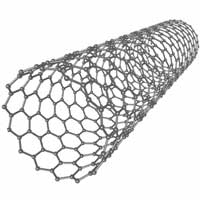
Researchers utilized symmetry, a time-worn concept of theoretical physics, to develop an effective method to run computer experiments on nanostructures under complex deformations.

Wednesday, February 20, 2019

Innovative nanocoating technology harnesses sunlight to degrade microplastics

Low density polyethylene film (LDPE) microplastic fragments, successfully degraded in water using visible-light-excited heterogeneous ZnO photocatalysts.

Thermally-painted metasurfaces yield perfect light absorbers for high-tech applications

Researchers report their insights into how colors are generated on heated metal surfaces and apply those findings to create a nickel thin-film that perfectly absorbs red light.