Tuesday, February 19, 2019

New machine learning technique rapidly analyzes nanomedicines for cancer immunotherapy

Novel approach will aid scientists in optimizing SNAs as therapeutic vaccines to treat cancer.

A nanoclay platform for treating osteoarthritis

Researchers have developed a new way to deliver treatment for cartilage regeneration.

Nanopores make portable mass spectrometer for peptides a reality

Scientists have developed nanopores that can be used to directly measure the mass of peptides. Although the resolution needs to be improved, this proof of principle shows that a cheap and portable peptide mass spectrometer can be constructed using existing nanopore technology.

Beyond the bulkheterojunction

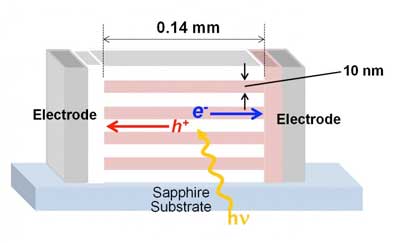
Lateral alternating multilayerd junction for organic solar cells.

Can a flowing liquid-like material maintain its structural order like crystals?

Scientists discovered a chiral compound, which can spontaneously form a molecular assembly with an extremely large single domain structure beyond a size regime incapable of realizing with usual molecular self-assembly.

Semiconductors - When a defect might be beneficial

In the quest to design more efficient solar cells and light-emitting diodes (LEDs), a team of engineers has analyzed different types of defects in the semiconductor material that enables such devices to determine if and how they affect performance.

Scientists identify atomic structure of catalytically active copper-ceria interface

Scientists have identified the atomic structure of the catalytically active copper-ceria interface and proposed a copper bilayer model.