

Wednesday, October 17, 2018

Taking steps toward a wearable artificial kidney

Researchers report a new urea sorbent based on MXene that could accelerate progress toward the development of a lightweight, wearable artificial kidney with the potential to make dialysis more convenient, comfortable and effective.

On the way to new electronic materials with metal-organic networks
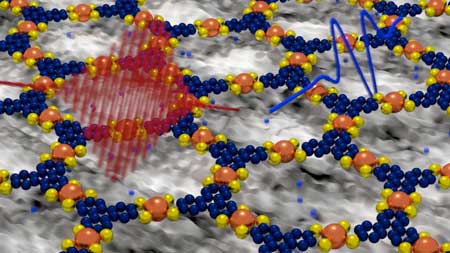
Scientists have developed and characterized a novel, metal-organic material which displays electrical properties mimicking those of highly crystalline silicon.

Tuesday, October 16, 2018

New reservoir computer marks first-ever microelectromechanical neural network application
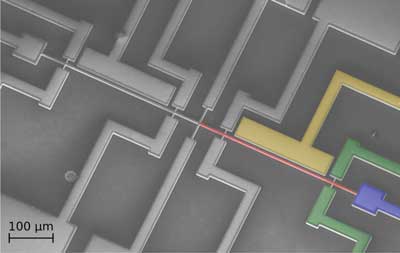
Researchers used oscillations from a microscopic beam of silicon to enable the nonlinear dynamics that allow neural networks to complete tasks ranging from processing image patterns to recognizing words.

Ruthenium as a new nanocatalyst for obtaining hydrogen
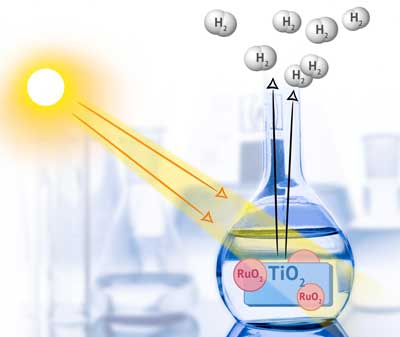
Chemists have used catalysts with ruthenium nanoparticles to obtain hydrogen under the influence of visible light and UV radiation.

Toward unhackable communication: Single particles of light could bring the quantum internet
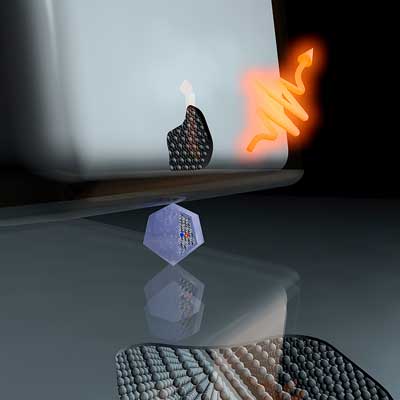
Hacker attacks on everything from social media accounts to government files could be largely prevented by the advent of quantum communication, which would use particles of light called photons to secure information rather than a crackable code.

Exploring new spintronics device functionalities in graphene heterostructures
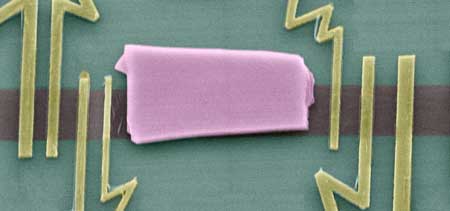
In new work, scientists show heterostructures built from graphene and topological insulators have strong, proximity induced spin-orbit coupling which can form the basis of novel information processing technologies.

Study shows faster, scalable way to make molecular semiconductors

Rcent work may enable scalable production of the nanoscale electrodes that are needed in order to explore molecules and exploit their behavior as potentially valuable electronic materials.