
Friday, May 4, 2018
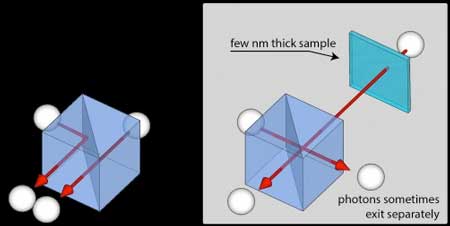
Nanoscale measurements 100x more precise, thanks to improved two-photon technique
The precision of measuring nanoscopic structures could be substantially improved, thanks to research into optical sensing.

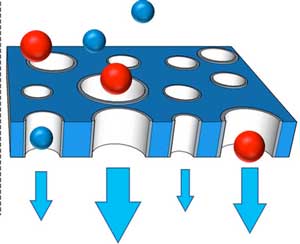
Engineered polymer membranes could be new option for water treatment
Chemical and biomolecular engineers studied self-assembled block polymer membranes, which allow for both customizable and uniform pore sizes, as a platform for water treatment systems.
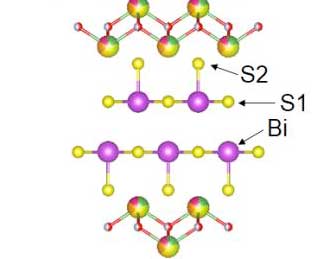
Making new layered superconductors using high entropy alloys
Promising strategy for creating state-of-the-art layered superconductors.
Thursday, May 3, 2018
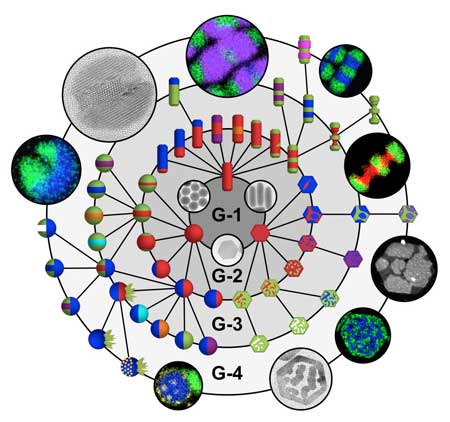
A designer's toolkit for constructing complex nanoparticles
A team of chemists has developed a designer's toolkit that lets them build various levels of complexity into nanoparticles using a simple, mix-and-match process.
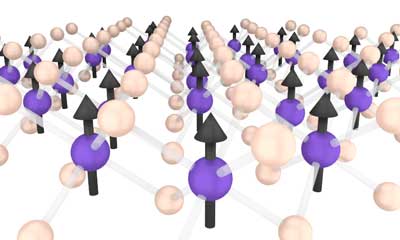
Atomically thin magnetic device could lead to new memory technologies
Researchers have encoded information using magnets that are just a few layers of atoms in thickness. This breakthrough may revolutionize both cloud computing technologies and consumer electronics by enabling data storage at a greater density and improved energy efficiency.
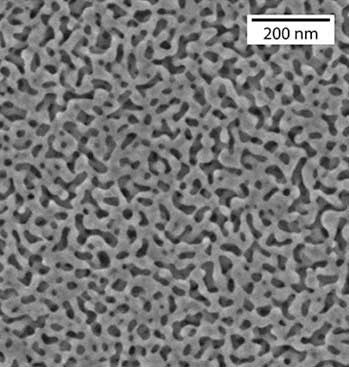
Mining for nanogold with a computer
Engineers report important new insights into nanoporous gold--a material with growing applications in several areas, including energy storage and biomedical devices--all without stepping into a lab.
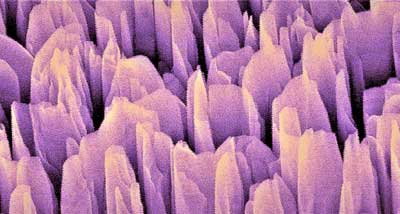
Harvesting clean hydrogen fuel through artificial photosynthesis
A new, stable artificial photosynthesis device doubles the efficiency of harnessing sunlight to break apart both fresh and salt water, generating hydrogen that can then be used in fuel cells.
Subscribe to:
Posts (Atom)