
Monday, March 19, 2018
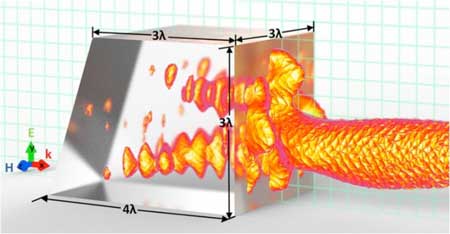
Scientists invented method of catching bacteria with 'photonic hook'
An international research team discovered a new type of curved light beams, dubbed a 'photonic hook'. Photonic hooks are unique, as their radius of curvature is two times smaller than their wavelength. This is the smallest curvature radius of electromagnetic waves ever recorded.

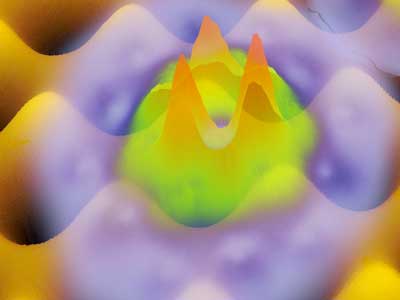
A new kind of quantum bits in two dimensions
Combining two ultra-thin material layers yields new possibilities for quantum electronics.
Nanopore-assisted research signals arrival of a complete human genome
New era exposes obscured gaps in our genetic maps critical to human health.

Shedding light on the mystery of the superconducting dome
Physicists have induced superconductivity in a monolayer of tungsten disulfide. By using an increasing electric field, they were able to show how the material turns from an insulator into a superconductor and then back into a 're-entrant' insulator again.
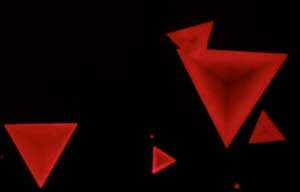
A future colorfully lit by mystifying physics of paint-on semiconductors
Some novel materials that sound too good to be true turn out to be true and good. An emergent class of semiconductors, which could affordably light up our future with nuanced colors emanating from lasers, lamps, and even window glass, could be the latest example.
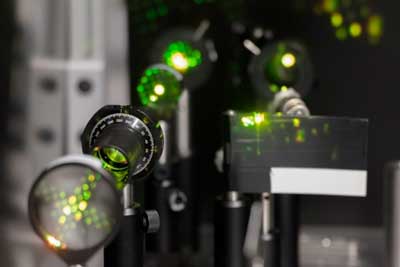
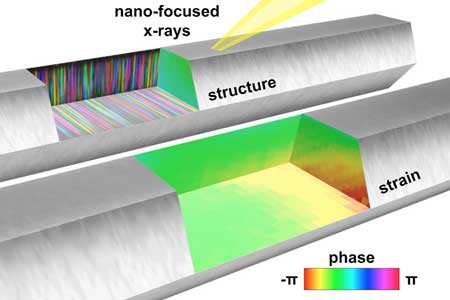
Scientists have a new way to gauge the growth of nanowires
In a new study, researchers observed the formation of two kinds of defects in individual nanowires.
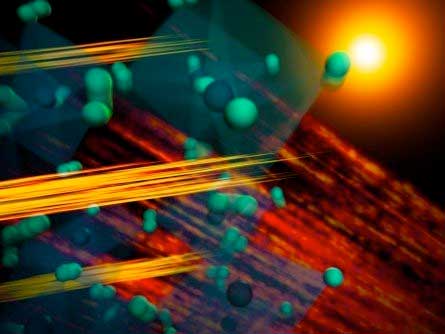
Atomic scale study reveals new insights into how hybrid perovskite solar cells work
Research conducted at the atomic scale could help explain how electric currents move efficiently through hybrid perovskites, promising materials for solar cells.
Subscribe to:
Posts (Atom)