 Cavitation has been widely assumed to be the underlying mechanism governing the fracture of metallic glasses, as well as other glassy systems. Up until now, however, scientists have been unable to directly observe the cavitation behavior of fractures, despite their intensive efforts.

Thursday, April 1, 2021
Scientists observe the role of cavitation in glass fracturing
Cavitation has been widely assumed to be the underlying mechanism governing the fracture of metallic glasses, as well as other glassy systems. Up until now, however, scientists have been unable to directly observe the cavitation behavior of fractures, despite their intensive efforts.

Search for strange Skyrmion phenomenon fails but finds stranger magnetic beaded necklace
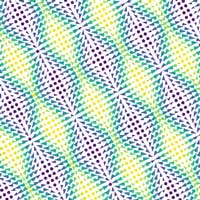 Physicists on the hunt for a rarely seen magnetic spin texture have discovered another object that bears its hallmarks, hidden in the structure of ultra-thin magnetic films, that they have called an incommensurate spin crystal.
From dinner to sustainable electronics, the surprising versatility of crabs
 Researchers report a sustainable nanocarbon material made from crab shells that are suitable for use in photosensing and energy storage devices.
Researchers develop third and final 'made-to-order' nanotube synthesis technique
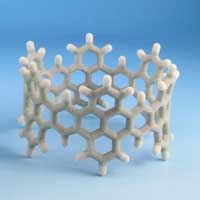 The typical 'top-down' method of producing carbon nanotubes does not allow for control over their diameter, length or which of three types will be produced. Control over two types has recently been demonstrated by producing their elementary 'nanobelt' molecules, and now researchers have developed a way to construct the third and last type, offering complete 'made-to-order' management of the synthesis of nanotube molecules.
3D design leads to first stable and strong self-assembling 1D nanographene wires
 An international team of researchers has synthesized curved, infinitely stacking nanographenes -- like potato chips in a cardboard can -- that can assemble into nanowires.
Novel nanocomposite developed for magnetic resonance tumor imaging
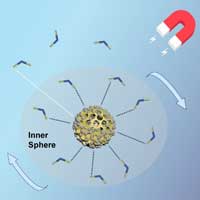 New nanocomposites pave the way for the practical clinical applications for manganese oxide nanosturctures in magnetic resonance imaging.
Why are optical refractive indices so small?
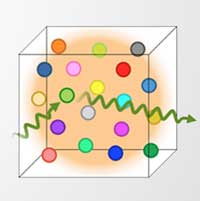 An international team of scientists reports on a new theory that can explain why the refractive index of a disordered atomic medium only reaches a maximum value of 1.7.
Subscribe to:
Posts (Atom)