 A binary nanoparticle array refers to a periodic structure comprising at least two types of building nanoparticles with component or morphological dissimilarities. Synthetic binary arrays can not only boost structural diversity, but also new optical or thermoelectronic properties synergized from different components.

Thursday, March 18, 2021
Self-assembly of 2D nonclose-packed binary gold nanoparticle arrays with tunable optical properties
A binary nanoparticle array refers to a periodic structure comprising at least two types of building nanoparticles with component or morphological dissimilarities. Synthetic binary arrays can not only boost structural diversity, but also new optical or thermoelectronic properties synergized from different components.

Scientists propose to use nanodiamonds in cancer treatment
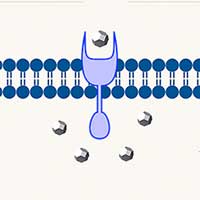 Scientists have recently investigated that carboxylated nanodiamonds could promote the adhesion of tumor cells to the underlying substrate, and motility of tumor cells are therefore limited.
Plasmonic gold nanogaps make light shine ever brighter
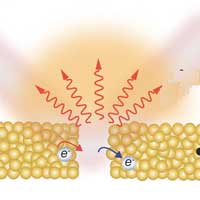 Physicists came across a phenomenon that boosts the light from a nanoscale device more than 1,000 times greater than they anticipated.
A triboelectric nanogenerator for efficient ocean wave energy harvesting
 Researchers have developed a water-tube-based TENG for irregular and low-frequency environmental energy harvesting, such as water waves.
Mystery of the nanobubbles solved
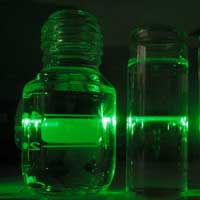 The observed lifetime of suspended nanobubbles is up to several weeks. However, according to the classical theory of bubble stability, a nanosized bubble should dissolve within microseconds. This controversy between experiments and theory is known as the nanobubble paradox.
Extremely conductive graphene hydrogel for medical applications
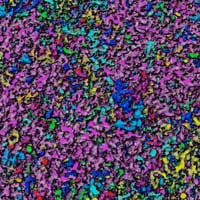 Researchers have developed a method to produce hydrogels with an excellent level of electrical conductivity. What makes this method special is that the mechanical properties of the hydrogels are largely retained.
Foiling burglars and safecrackers with invisible keyholes (w/video)
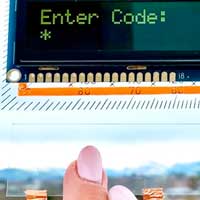 Hard times for burglars and safecrackers: Researchers have developed an invisible 'keyhole' made of printed, transparent electronics. Only authorized persons know where to enter the access code.
Subscribe to:
Posts (Atom)