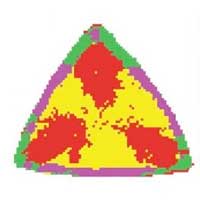
 The simple, automated optical identification of fundamentally-different physical areas on these materials could significantly accelerate their application in next-generation, energy-efficient computing, optoelectronics and future smart-phones.

Wednesday, March 3, 2021
'Target identified': teaching a machine how to identify imperfections in 2D materials
The simple, automated optical identification of fundamentally-different physical areas on these materials could significantly accelerate their application in next-generation, energy-efficient computing, optoelectronics and future smart-phones.

Tuesday, March 2, 2021
Carbon nanotube microelectrodes for optoelectronic e-textile applications
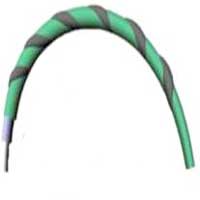 The performances of fiber optoelectronic components were improved by wrapping electrodes with desired shapes around the thread. Fiber photodiodes were integrated into the fabric to measure the wearer's pulse from their fingertips.
Chemistry goes under cover
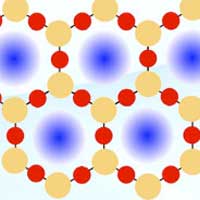 Covering metal catalyst surfaces with thin two-dimensional oxide materials can enhance chemical reactions.
Nanoparticle-delivered COVID-19 vaccine candidate shows promise in preclinical studies
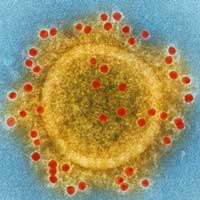 Scientists have developed a promising new COVID-19 vaccine candidate that utilizes nanotechnology and has shown strong efficacy in preclinical disease models.
Scientists improve understanding of plasma source for synthesis of carbon nanotubes
 Researchers have developed an insight that could facilitate production of microscopic carbon nanotubes used in everything from microchips to sporting goods to pharmaceutical products. The research could ensure that fabrication forms nanotubes as efficiently as possible.
Researchers develop new strategy for efficient OLED active matrix displays
 Researchers introduce a novel device concept towards high-efficient and low-voltage vertical organic lighting-emitting transistors. With the new device architecture and fabrication technology, the team paves the way for a broad application of efficient OLED active matrix displays.
Scientists develop elements for biomolecular electronics
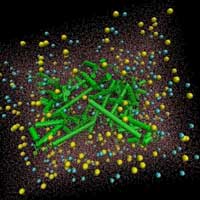 Scientists believe that biological macromolecules such as nucleic acids, proteins, amino acids can become a promising material for modern electronics. It obtains several unique properties, for example, the self-organization ability, which is why the molecules can be assembled into certain structures, for example, into biomolecular films.
Subscribe to:
Posts (Atom)