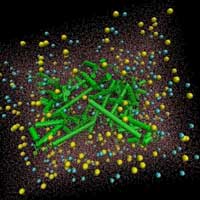
 Scientists believe that biological macromolecules such as nucleic acids, proteins, amino acids can become a promising material for modern electronics. It obtains several unique properties, for example, the self-organization ability, which is why the molecules can be assembled into certain structures, for example, into biomolecular films.

Tuesday, March 2, 2021
Scientists develop elements for biomolecular electronics
Scientists believe that biological macromolecules such as nucleic acids, proteins, amino acids can become a promising material for modern electronics. It obtains several unique properties, for example, the self-organization ability, which is why the molecules can be assembled into certain structures, for example, into biomolecular films.

Entirely new growth mechanism allows spontaneous folding growth of graphene
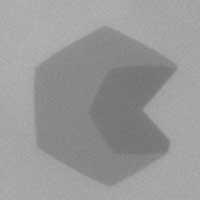 Scientists report the discovery of spontaneous folding growth of graphene on h-BN substrate via adopting a simple chemical vapor deposition method.
On-surface synthesis of graphene molecules and their superlattices
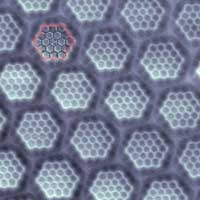 Researchers have devised a new method for the synthesis of nanographene molecules with a high product yield for the development of next generation quantum devices.
Chemists develop unique method for production of hollow nanoparticles from liquid metal
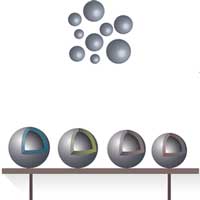 The new method will not only make these particles easier to produce, but it will also allow the properties of metal nanocapsules to be modified.
Freezing at the nanoscale: A closer look
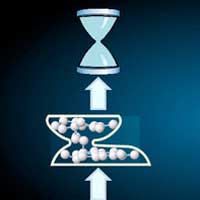 At the nanoscale, water freezes in various ways, and not all of them are completely understood. Among other benefits, getting a better handle on these processes could mean big improvements in weather prediction.
Coronavirus-like nanoparticles could ensure reliability of simpler, faster COVID-19 tests
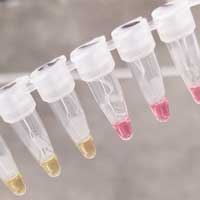 Such coronavirus-like nanoparticles would serve as something called a positive control for COVID-19 tests.
Universal sequence of Chern insulators in superconducting magic angle graphene
 Scientists have discovered a full sequence of symmetry broken Chern insulators which are induced by strong correlations in magic angle graphene.
Subscribe to:
Posts (Atom)