 Physicists have discovered an affordable method that makes it possible to use transparent materials for solar cells while preserving their efficiency. The new technology is based on the method of doping but without the use of expensive special-purpose equipment.

Thursday, February 18, 2021
Researchers develop affordable method for production of transparent solar cells
Physicists have discovered an affordable method that makes it possible to use transparent materials for solar cells while preserving their efficiency. The new technology is based on the method of doping but without the use of expensive special-purpose equipment.

Researchers advance bioinspired nanotechnology to enhance blood clotting to stop severe traumatic bleeding
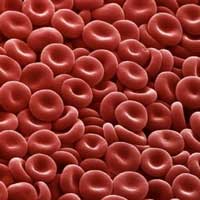 A team of researchers is working toward innovating and advancing platelet-inspired nanotechnology systems to treat severe bleeding in surgery and trauma.
Energy-harvesting nanogenerator technology to make roads safer
 Researchers used recycled plastic cups and silk cocoon waste to develop a soft and skin-friendly self-powered sensor, which can be used to sense human activities.
Researchers discover a new route to forming complex crystals
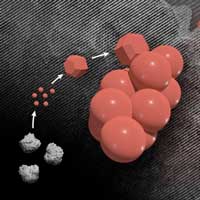 Researchers used advanced transmission electron microscopy (TEM) techniques to see mesocrystals form in solution in real time. What they saw runs contrary to conventional wisdom and their insights could one day help scientists design materials for energy storage and understand how minerals in soil form.
Electrons living on the edge
 Scientists use theoretical calculations to predict the possibility of 'massless' electrons in topological insulators excited with lasers, which may lead to faster and more efficient electronic devices.
Colloidal quantum dot lasers poised to come of age
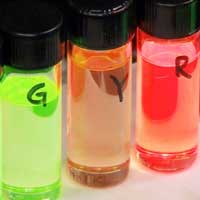 Despite lingering obstacles, practical lasing devices based on these tiny specs of semiconductor matter are just around the corner.
Wednesday, February 17, 2021
When magnetotactic microswimmers condense like cold atoms
 Scientists show that under certain circumstances magnetic field sensing microswimmers can self-organize into a new phase whose theoretical description shares formal similarities with that of ultra-cold quantum gases.
Subscribe to:
Posts (Atom)