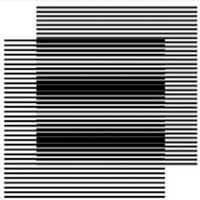
 Instruments normally found in physics labs are making their way into everyday applications. Scientists have greatly expanded these instruments' capabilities.

Tuesday, January 19, 2021
Navigation by atom - Coming to a vehicle near you
Instruments normally found in physics labs are making their way into everyday applications. Scientists have greatly expanded these instruments' capabilities.

Dynamic duos: How nanoparticles attach
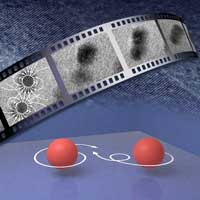 Researchers have established a quantitative understanding of how nano-sized particles assemble and crystalize for a model system of semiconductor zinc oxide.
Scientists for the first time obtained experimental evidence of an intermediate state of matter between a crystal and a liquid
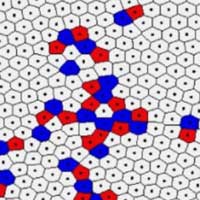 Scientists have experimentally confirmed the presence of an intermediate phase between the crystalline and liquid states in a monolayer dusty plasma system.
MOF aerogel turns air into drinking water
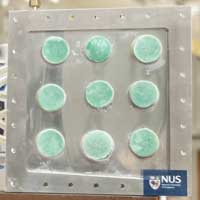 One kilogramme of the new material generates enough drinking water to meet a household's daily need, and does not require any external power source.
Monday, January 18, 2021
Clocking the movement of electrons inside an atom
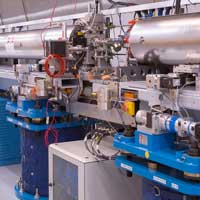 Scientists have developed an approach termed 'self-referenced attosecond streaking' that provides subfemtosecond resolution in spite of jitter, enabling time-domain measurement of the delay between photoemission and Auger emission in atomic neon excited by intense, femtosecond pulses from an XFEL.
Zebra stripes, leopard spots and other patterns on the skin of frozen metal alloys defying conventional metallurgy
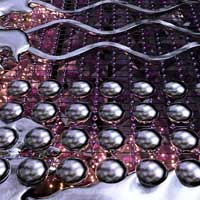 Researchers have discovered that diverse types of patterns occur at the surface of solidified metal alloys. The team used two-component metallic mixes, such as gallium-based alloys containing small amounts of bismuth. These alloys easily melt in one's hand and thus make experimental observation and control convenient.
Researchers realize strong coupling of single quantum dots with low/high-refractive-index materials at room temperature
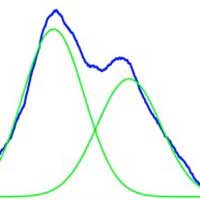 Researchers have reported for the first time the strong coupling and Rabi splitting between a single colloidal quantum dot and a Fabry-Perot cavity with dielectric low-refractive-index/high-refractive-index material based on photoluminescence spectra at room temperature.
Subscribe to:
Posts (Atom)