 Researchers have fabricated ultrathin, flexible, transparent sensors with cross-aligned silver nanowire microelectrodes fabricated using print technique that are scalable and require minimal raw materials.

Monday, December 14, 2020
Toward imperceptible electronics that you cannot see or feel
Researchers have fabricated ultrathin, flexible, transparent sensors with cross-aligned silver nanowire microelectrodes fabricated using print technique that are scalable and require minimal raw materials.

Industrial waste is reused to produce alternatives to plastic
 Researchers reused bacterial cellulose scraps usually thrown away by manufacturers of wound dressings to make strong biodegradable film for food packaging.
Reducing pesticide use with nanoparticles
 Scientists have discovered how certain silica nanoparticles could act as a traceless, degradable, and highly efficient treatment against some plant pathogens.
When less is more: A single layer of atoms boosts the nonlinear generation of light
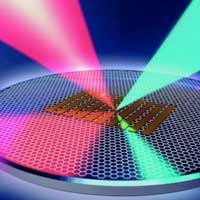 Researchers show that structures built around a single layer of graphene allow for strong optical nonlinearities that can convert light.
Physics discovery leads to ballistic optical materials
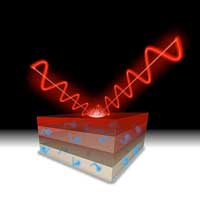 Scientists have found a way to create more efficient metamaterials using semiconductors and a novel aspect of physics that amplifies the activity of electrons.
Researchers investigate photosensitive carbon nanoparticles
 Researchers have managed to identify the fundamental problems relating to the photophysics and photochemistry of carbon nanocolloids, and ascertain possible approaches for research into these readily available, non-toxic and adaptable nanomaterials.
'Magic' angle graphene and the creation of unexpected topological quantum states
 Electrons inhabit a strange and topsy-turvy world. These infinitesimally small particles have never ceased to amaze and mystify despite the more than a century that scientists have studied them. Now, in an even more amazing twist, physicists have discovered that, under certain conditions, interacting electrons can create what are called 'topological quantum states'.
Subscribe to:
Posts (Atom)