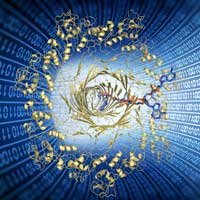
 Bioengineers have developed a nanopore-based system that can read data encoded into synthetic macromolecules with higher accuracy and resolution than similar methods on the market. The system is also potentially cheaper and longer-lasting, and overcomes limitations that prevent us from moving away from conventional data storage devices that are rapidly maxing out in capacity and endurance.

Monday, December 14, 2020
Bacterial nanopores open the future of data storage
Bioengineers have developed a nanopore-based system that can read data encoded into synthetic macromolecules with higher accuracy and resolution than similar methods on the market. The system is also potentially cheaper and longer-lasting, and overcomes limitations that prevent us from moving away from conventional data storage devices that are rapidly maxing out in capacity and endurance.

Using crab shells to improve palladium catalyst nanoparticles
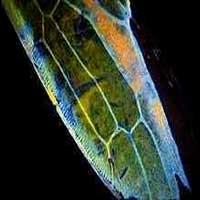 Chemists synthesized soluble biopolymers based on chitin from crab shells. Together with palladium, they form effective catalysts for organic reactions, and their nanoparticles can be re-used over ten times.
Nanoparticles, from hype to actual clinical product
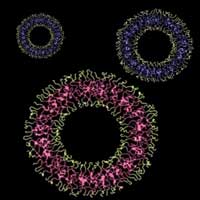 Scientists investigated a robust and scalable manufacturing process for nanocarriers and their building blocks. With these insights, the road to widely available clinical applications for nanocarriers has become much shorter.
Sheets of carbon nanotubes come in a rainbow of colours
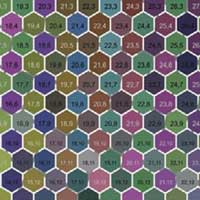 Nanomaterials researchers have created a colour atlas for 466 unique varieties of single-walled carbon nanotubes.
Not so fast! Controlling the speed of light bullets
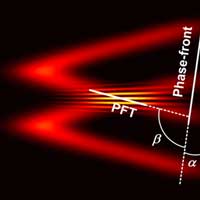 Researchers have accurately and arbitrarily control flying velocities of light bullets, offering new opportunities for optical and physical applications.
Looking inside the glass
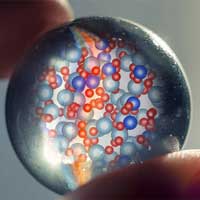 Scientists study aluminosilicate glass to determine its complex local structure with unprecedented detail. This work may lead to tougher and more inexpensive glass for touchscreens and solar arrays.
Artificial Chemist 2.0: Custom quantum dots in less than an hour
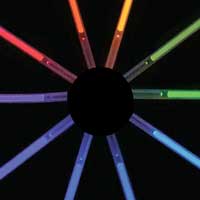 A new technology, called Artificial Chemist 2.0, allows users to go from requesting a custom quantum dot to completing the relevant R+D and beginning manufacturing in less than an hour. The tech is completely autonomous, and uses artificial intelligence (AI) and automated robotic systems to perform multi-step chemical synthesis and analysis.
Subscribe to:
Posts (Atom)