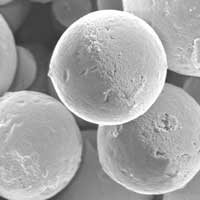
 Researchers have studied an impressive behavior of synthetic microswimmers: as soon as the photocatalytic particles leave an illuminated zone, they flip independently and swim back into the light.

Thursday, November 26, 2020
Microswimmers move like moths to the light
Researchers have studied an impressive behavior of synthetic microswimmers: as soon as the photocatalytic particles leave an illuminated zone, they flip independently and swim back into the light.

Improved 3D printing for aerospace composites using nanocarbon additives from oil waste
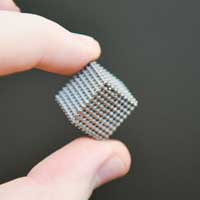 The nanocarbon additive to aluminum powder, obtained from the products of processing associated petroleum gas, will improve the quality of 3D printed aerospace composites by increasing the hardness of products by 1.5 times.
Lanthanide nanocrystals brighten molecular triplet excitons
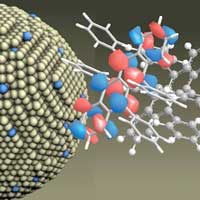 Scientists have developed an approach to improve the generation and luminescent harvesting of molecular triplets by coupling them with lanthanide-doped nanoparticles. This innovation provides new insights on lanthanide nanocrystal-molecule interaction in the optoelectronic field.
Wednesday, November 25, 2020
Researchers create nanoscale slalom course for electrons
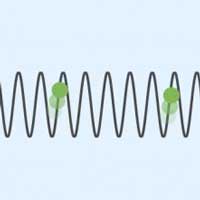 Researchers have created a serpentine path for electrons, imbuing them with new properties that could be useful in future quantum devices.
The quantum sensing abilities of nanodiamonds may help detect disease earlier
 The quantum sensing abilities of nanodiamonds can be used to improve the sensitivity of paper-based diagnostic tests, potentially allowing for earlier detection of diseases such as HIV.
Phytoplankton disturbed by nanoparticles
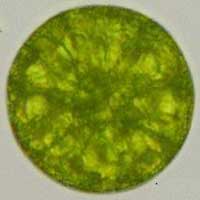 Researchers have investigated the effects of nanosilver, currently used in almost 450 products for its antibacterial properties, on the algae known as Poterioochromonas malhamensis. The results show that nanosilver and its derivative, ionic silver, disturb the alga's entire metabolism. Its membrane becomes more permeable, the cellular reactive oxygen species increases and photosynthesis is less effective.
Detecting bacteria with fluorescent nanosensors
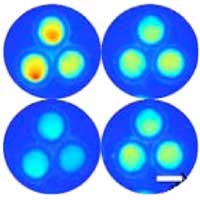 Scientists have developed a new method for detecting bacteria and infections. They use fluorescent nanosensors to track down pathogens faster and more easily than with established methods.
Subscribe to:
Posts (Atom)