 To ensure that sepsis patients receive appropriate antibiotics as quickly as possible, researchers have developed a diagnostic procedure that uses high-throughput sequencing of blood samples and delivers results much faster than conventional culture-based techniques. Thanks to the latest single-molecule sequencing techniques, this process has now been further improved so that pathogens can be identified after just a few hours.

Monday, November 9, 2020
Infection diagnostics 3.0: Faster thanks to nanopore sequencing
To ensure that sepsis patients receive appropriate antibiotics as quickly as possible, researchers have developed a diagnostic procedure that uses high-throughput sequencing of blood samples and delivers results much faster than conventional culture-based techniques. Thanks to the latest single-molecule sequencing techniques, this process has now been further improved so that pathogens can be identified after just a few hours.

Coating plastics with porous MOF nanofilms
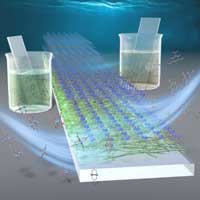 A research team has developed a new method for creating metal-organic framework (MOF) thin films that can be applied to sensors and electric devices.
Hollow porphyrinic nanospheres
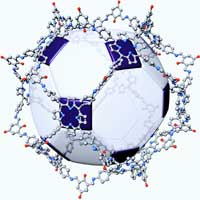 Making such purely organic, atomically precise hollow molecular spheres or cages is synthetically challenging. Now, researchers have successfully developed a template-free, one-pot synthesis of a porphyrin-based gigantic organic cages composed of multi-porphyrin units.
New insights into the production and dissociation of atomic clusters
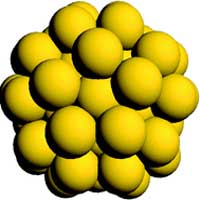 Atomic clusters are composed of several atoms of the same or very few different elements. Which conditions lead to the formation of atomic clusters? When and how do they fragment? These questions have been investigated by researchers.
Saturday, November 7, 2020
Nanocrystal encapsulation and delivery of water-insoluble drugs
 New research findings show that besides their applications in bioimaging techniques as phosphorescent markers, the new platinum nanocrystals may also have an application in biomedicine: to encapsulate water-insoluble drugs.
Optimizing the design of new materials
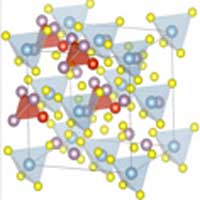 A new approach combines statistical inference, optimization theory, and computational materials physics to design new materials without large amounts of existing data.
Germanium telluride's hidden properties at the nanoscale revealed
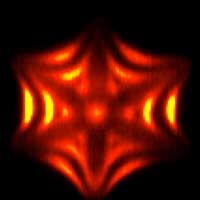 Germanium Telluride is an interesting candidate material for spintronic devices. In a comprehensive study, researchers have now revealed how the spin texture switches by ferroelectric polarization within individual nanodomains.
Subscribe to:
Posts (Atom)