 In a new study, researchers provide evidence for the novel future application of biosynthesized silver nanoparticles based nanoformulation for pest management.

Friday, September 25, 2020
Pest control with biosynthesized silver nanoparticles
In a new study, researchers provide evidence for the novel future application of biosynthesized silver nanoparticles based nanoformulation for pest management.

Secure nano-carrier delivers medications directly to cells
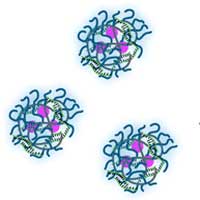 A stable nano-carrier for medications with a special mechanism that makes sure the drugs are only released in diseased cells.
Thursday, September 24, 2020
Nanosecond laser-induced amplification of a photochromic reaction in a diarylethene nanoparticle
 Researchers have found a drastically amplified ring-opening reaction yield in aqueous nanoparticle colloids of a photochromic diarylethene when induced by an intense nanosecond laser pulse, and clarified its amplification mechanism.
High-performance single-atom catalysts for high-temperature fuel cells
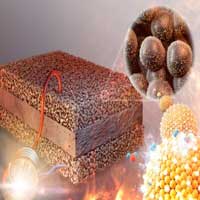 Individual platinum atoms participate in catalytic reaction to faciitate the electrode process by up to 10 times. Single-atom platinum catalysts are stable at 700 degrees Celsius and expected to stimulate the commercialization of next-gen reversible fuel cells.
Metal wires of carbon complete toolbox for carbon-based computers
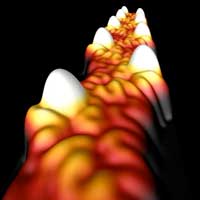 Metallic carbon circuit element enables work on faster, efficient carbon-based transistors.
Bridging the gap between the magnetic and electronic properties of topological insulators
 Scientists shed light on the relationship between the magnetic properties of topological insulators and their electronic band structure. Their experimental results shed new insights into recent debates regarding the evolution of the band structure with temperature in these materials, which exhibit unusual quantum phenomena and are envisioned to be crucial in next-generation electronics, spintronics, and quantum computers.
Dynamic tattoos promise to warn wearers of health threats
 You can't walk into a doctor's office and get a dynamic tattoo yet, but they are on the way. Early proof-of-concept studies provide convincing evidence that tattoos can be engineered, not only to change color, but to sense and convey biomedical information, including the onset of cancer.
Subscribe to:
Posts (Atom)