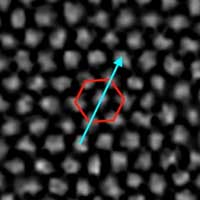
 Researchers have engineered a system of many small magnetic whirls to form a regularly ordered state. Such a transition from a disordered to an ordered phase is analogous to the well-known crystallization, which, however, occurs here in two dimensions.

Wednesday, September 9, 2020
Magnetic whirls crystallize in two dimensions
Researchers have engineered a system of many small magnetic whirls to form a regularly ordered state. Such a transition from a disordered to an ordered phase is analogous to the well-known crystallization, which, however, occurs here in two dimensions.

Detecting the handedness of a single nanoparticle
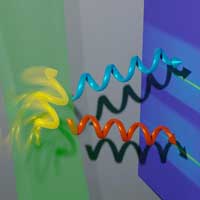 Scientists have developed a new spectroscopic-microscope, which can be used to observe a single nanoparticle in real time. This enabled the first detection of a nanoparticle's handedness while it is freely moving in solution.
Tuesday, September 8, 2020
Soft durable skin sensors can take the strain
 Researchers demonstrate a novel type of sensor which is applied directly to the skin to capture certain biometric information.
Scientists develop low-cost chip for detecting presence and quantity of COVID-19 antibodies
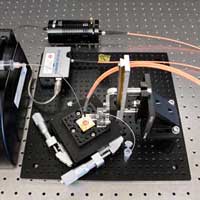 The device uses portable lab-on-a-chip technology to accurately measure the concentration of antibodies present in diluted blood plasma.
An environmentally friendly way to transform silicon into nanoparticles
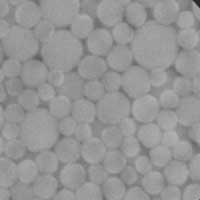 Scientists have developed a new method of silicon recycling. Converting silicon into silicon oxide nanoparticles answers to silicon waste recycling issues and providing a new source of nanoparticles for various uses in science and industry.
Boundaries no barrier for thermoelectricity
 Researchers find potentially useful electrical phenomenon in gold nanowires.
Extracting order from a quantum measurement finally shown experimentally
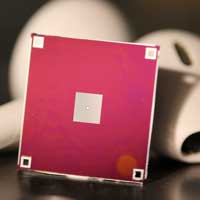 For more than a hundred years, physicists have been aware of the link between the concepts of disorder in a system, and information obtained by measurement. However, a clean experimental assessment of this link in common monitored systems, that is systems which are continuously measured over time, was missing so far.
Subscribe to:
Posts (Atom)