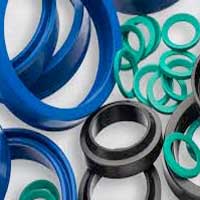
 Imagine a self-repairing rubber, or super-adhesive made entirely from waste materials. It sounds like science fiction, but researchers have discovered a new kind of rubber and catalyst that together can be used with low energy consumption to make flexible, repairable, sustainable objects - including car tires.

Monday, May 18, 2020
High hopes for new-age rubber
Imagine a self-repairing rubber, or super-adhesive made entirely from waste materials. It sounds like science fiction, but researchers have discovered a new kind of rubber and catalyst that together can be used with low energy consumption to make flexible, repairable, sustainable objects - including car tires.

A perfect novel optical vortex with controllable impulse ring profile
 Researchers demonstrated a perfect novel optical vortex with controllable impulse ring profile based on Circular Dammann Gratings.
Riddled with holes: Making flexible thin-film electronics more durable
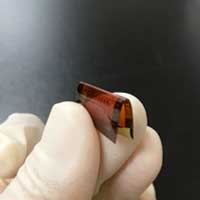 Researchers developed a simple approach for controlling the otherwise random formation of cracks in flexible thin-film conductors, greatly increasing the durability of flexible electrodes and transistors against bending and folding.
A theoretical boost to nanoscale devices
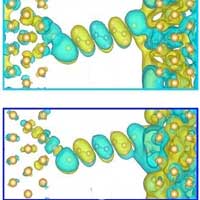 Scientists have developed a new approach to the underlying physics of semiconductors to engineer nano-scale transistors hit the limits of miniaturization at the atomic level.
Sunday, May 17, 2020
Interfaces the key in atomically-thin, 'high temperature' superconductors
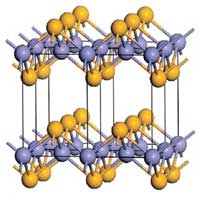 An international research team published a review of atomically-thin 'high temperature' superconductors finds that each has a common driving mechanism: interfaces.
A new library of atomically thin two-dimensional materials
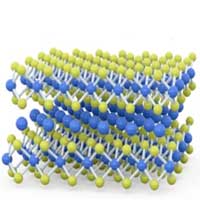 Researchers have created a whole new library of atomically thin two-dimensional (2D) materials, christened 'ic-2D', to denote a class of materials based on self-intercalation of native atoms into the gap between the layers of crystals.
Friday, May 15, 2020
Scientists break the link between a quantum material's spin and orbital states
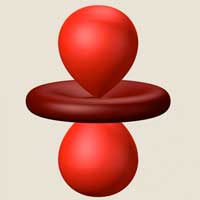 The advance opens a path toward a new generation of logic and memory devices based on orbitronics that could be 10,000 times faster than today's.
Subscribe to:
Posts (Atom)