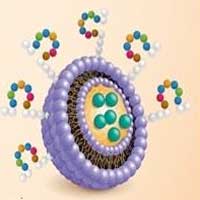
 Researchers developed a cyclic peptide (a chain of amino acids bonded circularly) that enhances blood-brain barrier (BBB) penetration. By attaching the cyclic peptide to the surface of nanoparticles, research and development of new drug nanocarriers for drug delivery to the brain becomes possible.

Friday, April 17, 2020
New nanocarrier drug delivery technology crosses the blood-brain barrier
Researchers developed a cyclic peptide (a chain of amino acids bonded circularly) that enhances blood-brain barrier (BBB) penetration. By attaching the cyclic peptide to the surface of nanoparticles, research and development of new drug nanocarriers for drug delivery to the brain becomes possible.

Single atom layer trap for lithium-ion migration
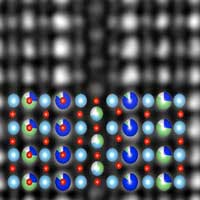 Scientists have observed a new type of microscopic feature that can significantly influence ionic transport.
Flatter graphene, faster electrons
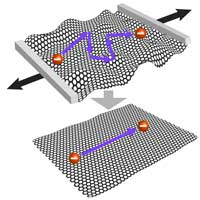 Bumps on a road slow down our pace, so do corrugations in graphene to travelling electrons. By flattening the corrugations out, we help electrons move effectively faster through a graphene sheet.
High-capacity nanocarbon battery material uses salmon DNA
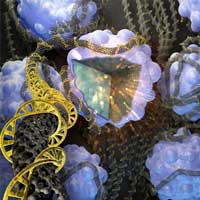 Stabilizing the surface of over-lithiated layered oxides using DNA from salmon and carbon nanotubes. Improved catalyst performance and lifespan found through the use of integrated advanced analytical techniques.
A carbon nanotube adhesive sheet with extremely high thermal conductivity
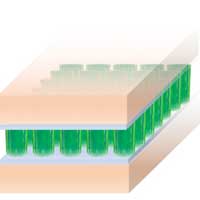 Thermal conductivity three times higher than conventional materials, enabling practical use as a heat dissipation material.
Pushing the limits of 2D supramolecules
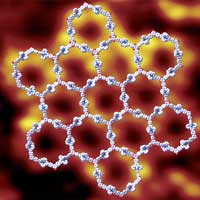 Scientists have reached a new milestone in the development of two-dimensional supramolecules - the building blocks that make areas of nanotechnology and nanomaterial advancement possible.
Wednesday, April 15, 2020
Carbon nanotube nanosensor alerts smartphone when plants are stressed
 Carbon nanotubes embedded in leaves detect chemical signals that are produced when a plant is damaged.
Subscribe to:
Posts (Atom)