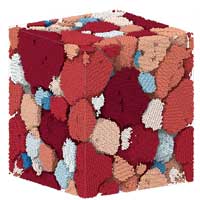
 Researchers have invented a machine-learning based algorithm for quantitatively characterizing, in three dimensions, materials with features as small as nanometers.

Friday, April 3, 2020
Capturing 3D microstructures in real time
Researchers have invented a machine-learning based algorithm for quantitatively characterizing, in three dimensions, materials with features as small as nanometers.

A new way to fine-tune exotic materials: Thin, stretch and clamp
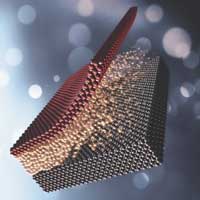 Turning a brittle oxide into a flexible membrane and stretching it on a tiny apparatus flipped it from a conducting to an insulating state and changed its magnetic properties.
Turning cells into computers with protein logic gates
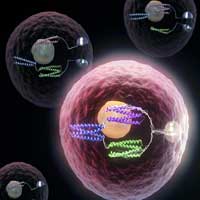 Biochemists have created 'smart' proteins that function inside human cells by turning genes on and off.
Thursday, April 2, 2020
3D reconstructions of individual nanoparticles
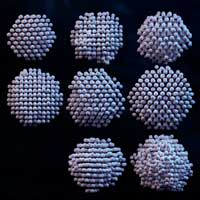 Liquid phase electron microscopy illuminates 3D atomic structures of platinum nanoparticles, advancing full control of nanoengineering.
Newly discovered biostability in DNA structures may lead to enhanced design of therapeutics
 Researchers discovered an already existing biostable DNA motif applicable to the design of new drug carriers and diagnostics.
Molding molecular matter
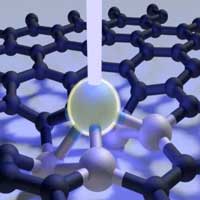 Scientists used a focused beam of electrons to stitch platinum-silicon molecules into graphene, marking the first deliberate insertion of artificial molecules into a graphene host matrix.
Bacteria on nanowires convert sunlight, carbon dioxide and water to organic building blocks
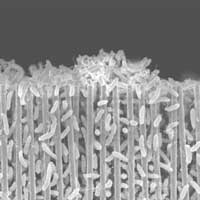 Researchers have developed a hybrid system combining bacteria and nanowires that can capture the energy of sunlight to convert carbon dioxide and water into building blocks for organic molecules.
Subscribe to:
Posts (Atom)