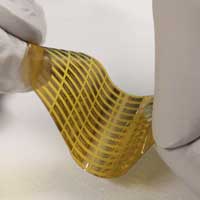
 Researchers have developed a nanodevice that operates more than 10 times faster than today's fastest transistors.

Wednesday, March 25, 2020
A nanoscale device to generate high-power Terahertz waves
Researchers have developed a nanodevice that operates more than 10 times faster than today's fastest transistors.

'Whiskey webs' are the new 'coffee ring effect'
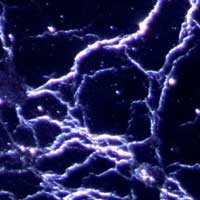 The 'coffee ring effect' has fascinated scientists for decades, but now a team says they have uncovered the mechanism behind an even more striking, web-like pattern that forms when drops of whiskey dry up.
First ultra-low threshold continuous-wave lasing in Germanium-Tin
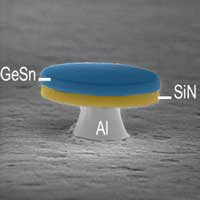 Researchers have implemented a new material engineering method to fabricate a laser microdisk in strained Germanium-Tin (GeSn) alloy. They demonstrate for the first time the laser device with a group IV compound, compatible with Silicon, operating with ultra-low threshold and under continuous wave excitation.
Shifting dimensions: Exciting excitons in phosphorene
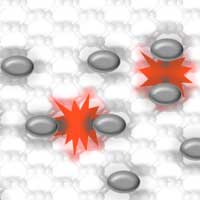 Scientists have shed light on how excitons - an excited state of matter at the core of optoelectronics - move and interact within phosphorene.
Tuesday, March 24, 2020
Upconverting nanolasers from subwavelength plasmons
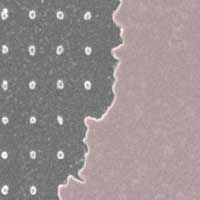 To design these nanolasers, researchers combined arrays of nanopillars with nanoparticles that can absorb two photons of light and emit them as a single photon with higher energy.
A genetic nano-toolkit for the generation of new bacterial magnetic nanoparticles
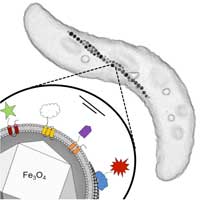 Scientists have developed a modular system for the genetic reprogramming of bacteria, thereby turning the organisms into cell factories for multifunctional magnetic nanoparticles that combine various useful functions and properties. Because of their exceptional magnetic properties and good biocompatibility, these nanoparticles might be a promising new material in the biomedical and biotechnological field.
Crumpled graphene makes ultra-sensitive cancer DNA detector
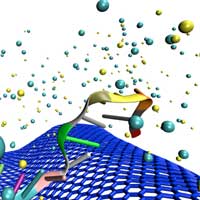 Crumpling graphene makes it more than ten thousand times more sensitive to DNA by creating electrical 'hot spots'.
Subscribe to:
Posts (Atom)