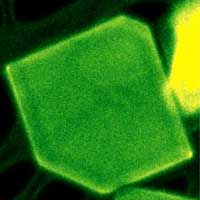
 Researchers discovered a new way to integrate semiconductor layers to make heterostructures. They found that layers of different compounds of tin and sulfur spontaneously separated during synthesis. This unique structure translates into excellent light absorption and energy transfer properties.

Monday, March 23, 2020
Wrapped, layered semiconductors catch the light
Researchers discovered a new way to integrate semiconductor layers to make heterostructures. They found that layers of different compounds of tin and sulfur spontaneously separated during synthesis. This unique structure translates into excellent light absorption and energy transfer properties.

Optical control allows physicists to simulate and understand interactions between atoms
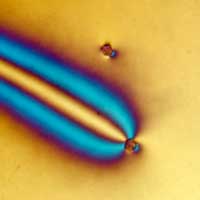 Scientists used silica micro-particles mixed into liquid crystals to investigate how atoms behave and interact. They explored optical control of hexagonal silica micro-particles whose surfaces were altered with dye molecules and dispersed in a liquid crystal.
Stacked nanodevice quickly detects harmful bacteria in blood
 Engineers have created a tiny device that can rapidly detect harmful bacteria in blood, allowing health care professionals to pinpoint the cause of potentially deadly infections and fight them with drugs.
Graphene flakes on medical devices kill bacteria and prevent infections
 Graphite nanoplatelets integrated into plastic medical surfaces can prevent infections, killing 99.99 per cent of bacteria which try to attach - a cheap and viable potential solution to a problem which affects millions, costs huge amounts of time and money, and accelerates antibiotic resistance.
Graphene cleans water more effectively
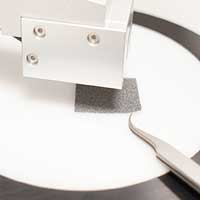 Graphil is a project that aims to create a market prototype for a new and improved way to purify water, using graphene.
How do you power billions of sensors? By converting waste heat into electricity
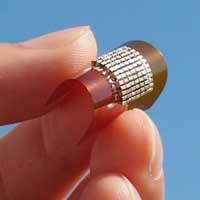 Scientists have revealed how the thermoelectric effect, or converting temperature differences into electricity, can be optimally used to power small, flexible devices. Their study has shown why thermoelectric device performance to date has not yet reached its full potential.
Wearable strain sensor based on optical transmittance of a CNT-embedded elastomer
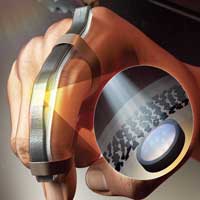 Rsearchers have developed a novel wearable strain sensor based on the modulation of optical transmittance of a carbon nanotube (CNT)-embedded elastomer. The sensor is capable of sensitive, stable, and continuous measurement of physical signals.
Subscribe to:
Posts (Atom)