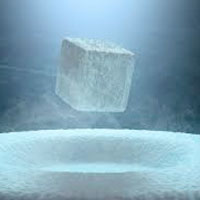
 Scientists discovered Majorana zero modes at both ends of 1D atomic line defects in two-dimensional iron-based high-temperature superconductors.

Friday, March 13, 2020
Discovery of zero-energy bound states at both ends of a one-dimensional atomic line defect
Scientists discovered Majorana zero modes at both ends of 1D atomic line defects in two-dimensional iron-based high-temperature superconductors.

Pathways toward realizing the promise of all-solid-state batteries
 Nanoengineers offer a research roadmap that includes four challenges that need to be addressed in order to advance a promising class of batteries - all-solid-state batteries - to commercialization.
3D Hierarchically porous nanostructured catalyst helps efficiently reduce CO2
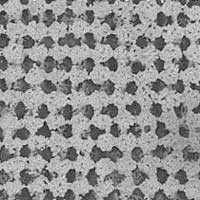 Researchers developed a three-dimensional hierarchically porous nanostructured catalyst with carbon dioxide to carbon monoxide conversion rate up to 3.96 times higher than that of conventional nanoporous gold catalysts.
A scalable production system for MXenes
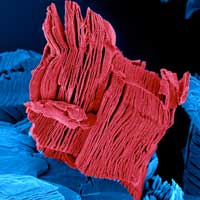 Researchers have designed a system that can be used to make large quantities of the material while preserving its unique properties. The lab-scale reactor system can convert a ceramic precursor material into a pile of the powdery black MXene titanium carbide, in quantities as large as 50 grams per batch.
Water-free way to make MXenes could mean new uses for the promising nanomaterials
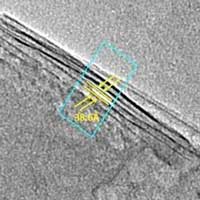 The new discovery removes water from the MXene-making process, which means the materials can be used in applications in which water is a contaminant or hampers performance, such as battery electrodes and next-generation solar cells.
Thursday, March 12, 2020
Laser metallizes 2D insulator
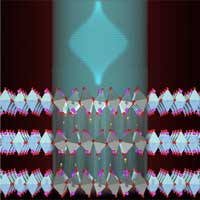 Scientists uncovered an anomalous metallic behavior in an otherwise insulating ceramic material. The team used ultrashort light pulses with a wide range of colors to watch what happens when the insulating quasi two-dimensional material La2CuO4 (LCO) becomes a three-dimensional metal through laser irradiation.
Universal 3D-printing nanocarrier ink paves way for personalized biomaterial implants
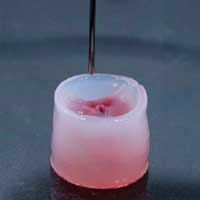 Researchers have produced a gel from cellulose fibres and biodegradable nanoparticles that liquifies when pressed through the nozzle of a 3D printer, but then quickly returns to its original shape.
Subscribe to:
Posts (Atom)