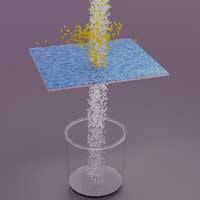
 Researchers have made a leap forward in overcoming one of the biggest problems in membrane technology - membrane fouling.

Thursday, February 27, 2020
Oil separation made easier with 2D material membrane
Researchers have made a leap forward in overcoming one of the biggest problems in membrane technology - membrane fouling.

Assessing the risks associated with nanoparticles in medical applications
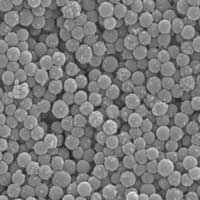 Researchers have conducted an environmental hazard assessment for a class of substances used in drug delivery.
Tying up molecules as easily as you tie up your laces
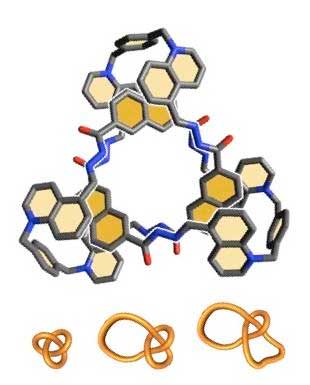 Researchers have developed a simple and effective technique for tying knots in molecules, and have for the first time observed the changes in properties that result from these interlockings. The results open up new perspectives for designing materials and transferring information molecularly.
Wednesday, February 26, 2020
Nanoelectronics enables brain neurons and artificial neurons to communicate with each other
 This study has for the first time shown how three key emerging technologies can work together: brain-computer interfaces, artificial neural networks and advanced memory technologies (also known as memristors).
Nanoscale precipitates make big difference in mitigating strength-ductility tradeoff
 Researchers have found that nanoscale precipitates provide a unique sustainable dislocation source at sufficiently high stress.
New technique to create nanomaterials may help detect cancer earlier
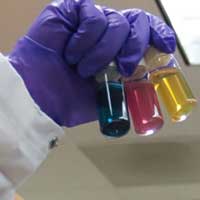 For the first time, a team of scientists has created functional nanomaterials with hollow interiors that can be used to create highly sensitive biosensors for early cancer detection.
Light-shrinking device enables detection of ultra-tiny substances
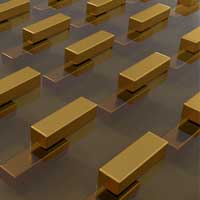 Engineers have created light-based technology that can detect biological substances with a molecular mass more than two orders of magnitude smaller than previously possible. The advance was made possible by building a device that shrinks light while exploiting mathematical singularities known as exceptional points.
Subscribe to:
Posts (Atom)