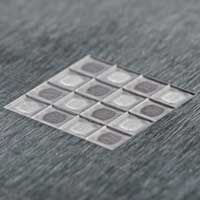
 Anti-fouling, hydrophobic metal or plastic surfaces that imitate shark skins, engraved by a new laser technology, could soon replace the toxic varnishes used in ship coatings to stop algae or barnacles sticking to hulls - reducing maintenance costs, fuel bills and CO2 emissions.

Tuesday, February 4, 2020
Laser-engraved metal to reduce environmental impact
Anti-fouling, hydrophobic metal or plastic surfaces that imitate shark skins, engraved by a new laser technology, could soon replace the toxic varnishes used in ship coatings to stop algae or barnacles sticking to hulls - reducing maintenance costs, fuel bills and CO2 emissions.

Vibrations on a chip feel a magnetic field
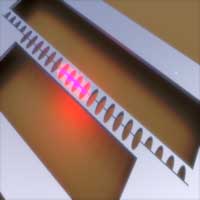 Physicists have made mechanical vibrations on a chip behave as if they were electrical currents flowing in a magnetic field.
Retina-inspired carbon nitride-based photonic synapses for selective detection of UV light
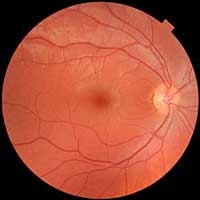 Scientists have developed photo-sensitive artificial nerves that emulated functions of a retina by using 2-dimensional carbon nitride nanodot materials.
New funding for project to develop nanodevices against epilepsy and Parkinson's
 Novel nanotechnologies could be used as brain implants, modulating the activity of nerve cells electrochemically and treating neurological diseases.
Sweet nanoparticles trick kidney
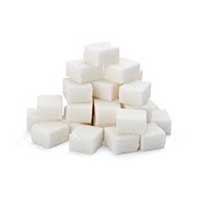 Researchers engineer nanoparticles with sugar molecules to prevent side effect in cancer therapy.
Single atom as measuring probe uses quantum information for the first time
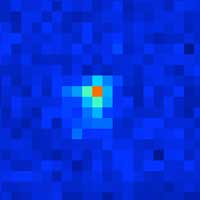 Researchers have succeeded for the first time in using a single caesium atom as a sensor for ultracold temperatures.
Thinning down Weyl semimetals provides a new twist to spintronics
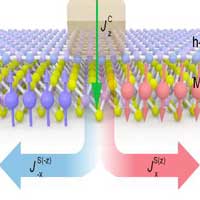 Using a material's spin property to carry current opens up the possibilities to transfer data at much higher speed and achieves better energy efficiency than traditional devices that rely on electrical charges. However, this requires a material that can generate long-lived pure spin current with high efficiency.
Subscribe to:
Posts (Atom)