 Applying a coat of paint on the walls of a house may soon help to heat it, saving energy and reducing CO2 emissions. It could also clean the air that we breathe, breaking down chemicals and pollutants, and eliminating harmful pathogens.

Friday, January 24, 2020
The paints that eat pollutants and heat homes
Applying a coat of paint on the walls of a house may soon help to heat it, saving energy and reducing CO2 emissions. It could also clean the air that we breathe, breaking down chemicals and pollutants, and eliminating harmful pathogens.

A breakthrough in molding materials at the nanoscale
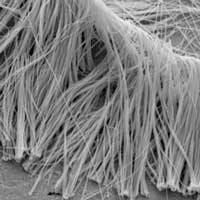 In a potential game-changing shift in how nano- and quantum devices are designed and manufactured, researchers have discovered that these materials are actually very conducive to nanomolding, thanks to their atoms? ability to self-organize.
Thursday, January 23, 2020
A megalibrary of nanoparticles
 Using straightforward chemistry and a mix-and-match, modular strategy, researchers have developed a simple approach that could produce over 65,000 different types of complex nanoparticles, each containing up to six different materials and eight segments, with interfaces that could be exploited in electrical or optical applications.
Tuning of Optical absorbance of graphene quantum dots by high magnetic fields
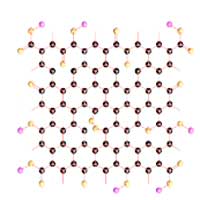 Scientists report the synthesis of graphene quantum dots under an external high magnetic field and their applications in photothermal therapy.
A new way to count and identify microscopic particles in fluids
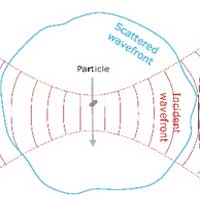 A new method is proposed to automate the measurement of nano- to microscale particles suspended in fluid. The single particle extinction and scattering (SPES) method can accurately determine the material properties and size distribution of individual particles.
Predicting the degradation behavior of advanced medical devices
 Thin film studies are suggested as a fast and reliable method to determine the degradation of complex biomacromolecules.
Well-designed substrates make large single crystal bi-/tri-layer graphene possible
 Researchers fabricate single crystal copper nickel alloy foils as substrates for the growth of multilayer graphene with specific stacking pattern, and unprecedented quality and size.
Subscribe to:
Posts (Atom)