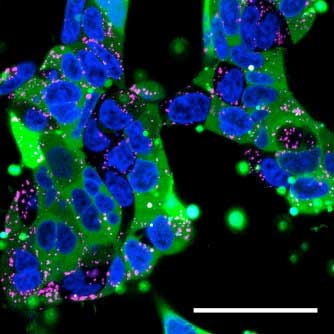
 Researchers have created a tiny, nanosize container that can slip inside cells and deliver protein-based medicines and gene therapies of any size - even hefty ones attached to the gene-editing tool called CRISPR.

Monday, December 9, 2019
Nanocontainer ships titan-size gene therapies and drugs into cells
Researchers have created a tiny, nanosize container that can slip inside cells and deliver protein-based medicines and gene therapies of any size - even hefty ones attached to the gene-editing tool called CRISPR.

Sunday, December 8, 2019
Nanowire captures Abrikosov vortices
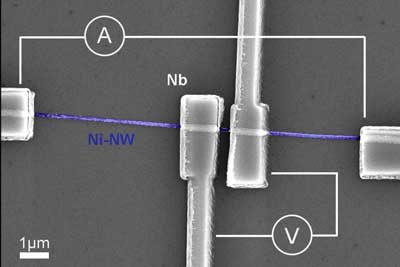 Scientists have demonstrated the possibility of detecting the penetration of Abrikosov vortices through the superconductor/ferromagnet interface. The device is a ferromagnetic nanowire bonded to superconductive electrodes.
A sustainable new material for carbon dioxide capture
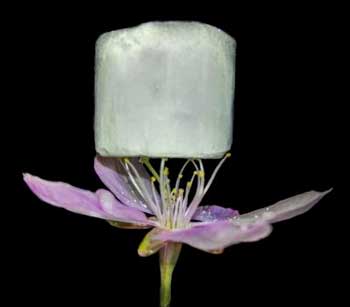 The new material offers many benefits: it is sustainable, has a high capture rate, and has low operating costs.
Self-cleaning solar panels with nanotextured surfaces
 Researchers look to the lotus leaf for self-cleaning innovation.
Saturday, December 7, 2019
Electronic map reveals 'rules of the road' in superconductor
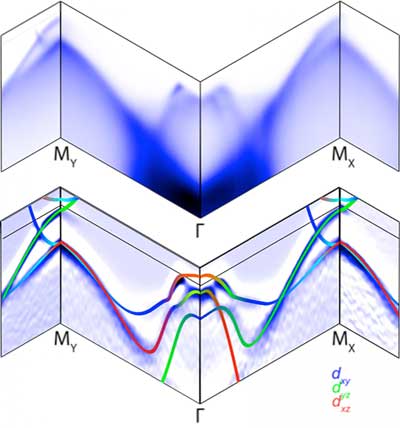 Using a clever technique that causes unruly crystals of iron selenide to snap into alignment, physicists have drawn a road map that reveals the quantum 'rules of the road' that electrons must follow in the enigmatic superconductor.
Friday, December 6, 2019
Microcavities save organic semiconductors from going dark
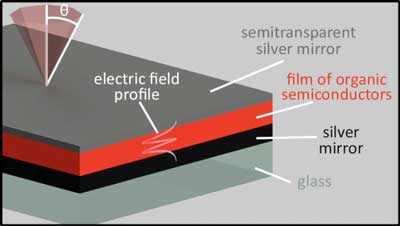 Researchers found a way to keep these organic semiconductors from going dark. They used tiny sandwich structures of mirrors, called microcavities, to trap light and force it to interact with a layer of molecules, forming a new hybrid state, known as a polariton, that mixes light and matter.This approach could lead to brighter, more efficient LEDs, sensors and solar cells.
A new view for glasses
 Scientists used computer simulations to demonstrate how the dynamics of a glassy liquid can be predicted based on the local structural ordering at the atomic level. This work may lead to a deeper understanding of glass transition.
Subscribe to:
Posts (Atom)