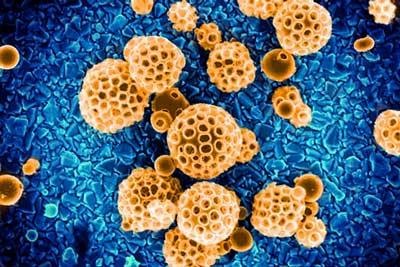
 Iridium is an ideal catalyst for the electrolytic production of hydrogen from water - but it is extremely expensive. But now a new kind of electrode made of highly porous material does an excellent job with just a hint of iridium.

Tuesday, November 19, 2019
Economizing on iridium for electrodes
Iridium is an ideal catalyst for the electrolytic production of hydrogen from water - but it is extremely expensive. But now a new kind of electrode made of highly porous material does an excellent job with just a hint of iridium.

New nanoscale technology shown to inhibit development of Alzheimer's disease
 Researchers have developed nanoscale silicon chips for direct insertion of neural growth factor into the brain and its release into the target tissue.
A remote control for everything small
 Atoms, molecules or even living cells can be manipulated with light beams. Researchers developed a method to revolutionize such 'optical tweezers'.
Atoms don't like jumping rope
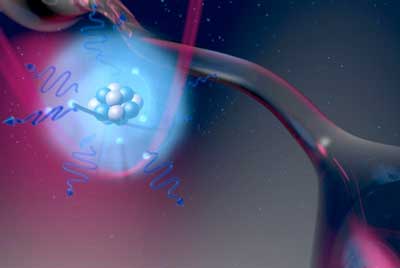 Nanooptical traps are a promising building block for quantum technologies. Scientists have now removed an important obstacle to their practical use. They were able to show that a special form of mechanical vibration heats trapped particles in a very short time and knocks them out of the trap.
Monday, November 18, 2019
Directional control of self-propelled protocells
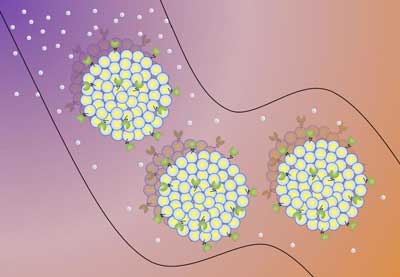 Synthetic protocells can be made to move toward and away from chemical signals, an important step for the development of new drug-delivery systems that could target specific locations in the body.
A four-way switch promises greater tunability of layered materials
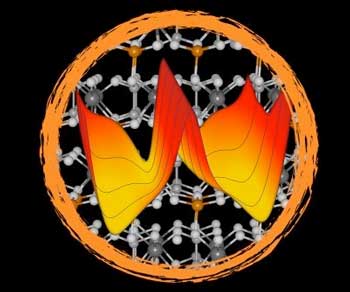 Scientists made the first experimental observation of a material phase that had been predicted but never seen. The newly discovered phase couples with a known phase to enable unique control over material properties - an advance that paves the way to eventual manipulation of electrical conduction in two-dimensional materials such as graphene.
Silver and titanium nanomaterials present in wastewater may have toxic effects on crustaceans and fish cells
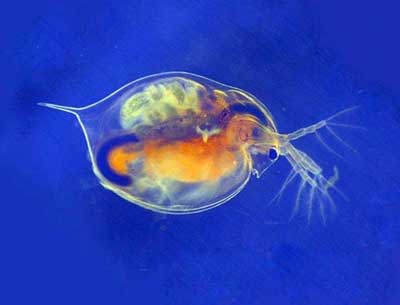 New research shows that silver and titanium nanoparticles in present in treated wastewater may have toxic effects on algae, crustaceans and fish gill cells, and the effects seem to be species dependent.
Subscribe to:
Posts (Atom)