 Chemists have studied how molecular building blocks can either form a spherical cage or an ultrathin sheet that shows some of the basic properties of a 'smart' material that can respond to its environment.

Friday, November 15, 2019
Chemists map an artificial molecular self-assembly pathway with complexities of life
Chemists have studied how molecular building blocks can either form a spherical cage or an ultrathin sheet that shows some of the basic properties of a 'smart' material that can respond to its environment.

How much does an AFM cost?
 The answer to the question how much an atomic force microscope (AFM) costs is always 'it depends'. The pricing of scanning probe microscopes is influenced by many factors, like the performance, capabilities and modes you expect from your instrument, which in turn determine the components and complexity of the technology employed.
Storing energy in hydrogen 20 times more effective using platinum-nickel nanocatalyst
 Catalysts accelerate chemical reactions, but the widely used metal platinum is scarce and expensive. Researchers have now developed an alternative with a 20x higher activity: a catalyst with hollow nanocages of an alloy of nickel and platinum.
Thursday, November 14, 2019
Super-strong magnetic supercrystals can assemble themselves
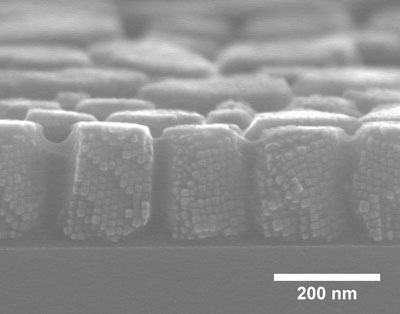 The strength of the supercrystals in combination with their enhanced magnetic properties will be key to developing future uses, which could span everything from applications for the automotive industry to information technology.
Scientists design built-in controls for mini-chemical labs on a chip
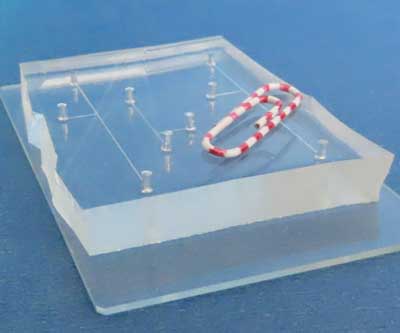 Researchers share their discovery of a way to program built-in controls in a microfluidic network.
Novel nanostructures could make smartphones more efficient
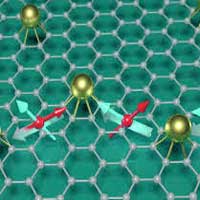 Researchers are pushing the boundaries of the laws of physics, developing nanocomposite materials and nanoelectronic circuits to greatly improve energy, thermal and computing performance. This could make smartphones and other electronics more efficient and boost the potential of solar power.
Carbon nanotubes open new horizons for neuroscience: controlling neural cell outgrowth
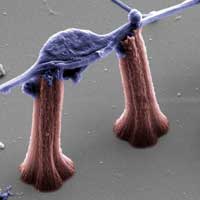 Researchers demonstrate that carbon nanotubes can be used to control the direction of neural cells growth.
Subscribe to:
Posts (Atom)