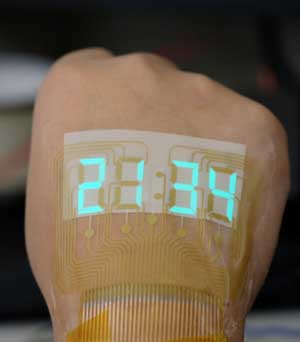
 Researchers have developed a stretchable light-emitting device that operates at low voltages and is safe for human skin.

Wednesday, October 30, 2019
A stretchable stopwatch lights up human skin
Researchers have developed a stretchable light-emitting device that operates at low voltages and is safe for human skin.

Tuesday, October 29, 2019
An electronic signal expands material by a factor of 100
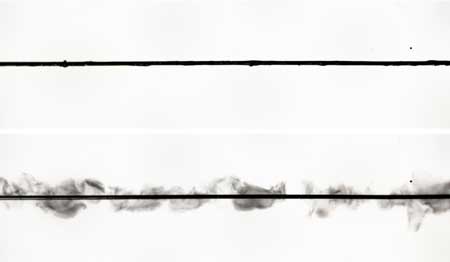 Researchers have discovered a material that can both increase and reduce its volume when exposed to a weak electrical pulse. In a sponge, or filter, the researchers can control the size of particles that pass through.
Nanoelectronics simulations to identify optimal heat-evacuating properties
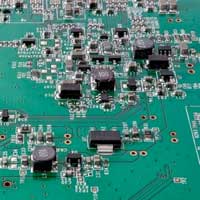 Team simulates nanoelectronics through data-centric lens, gaining a 140-fold speedup on the Summit supercomputer.
Researchers use light emitted from nanoparticles to intricately control biological processes
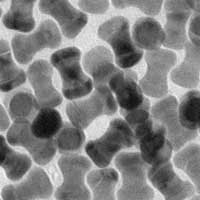 New nanoparticles can adjust the beating speed of heart cells by emitting different colours of light. Light from nanoparticle clusters was also able to activate anticancer drugs within cells.
Monday, October 28, 2019
Materials scientists detail unexpected distortions in self-assembling polymers
 Scientists report their characterization of a soft-matter double gyroid. What they briefly thought would be a perfect double gyroid, its curving arrangement of nodes and rods repeating ad infinitum, was not to be. They found instead their hoped-for cubic construction was full of distortions.
Scientists synthesized light with new intrinsic chirality to tell mirror molecules apart
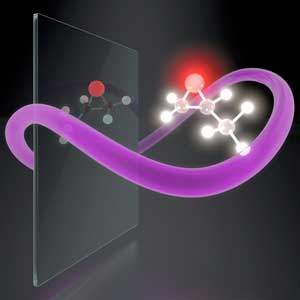 Researchers have shown how to generate and characterize an entirely new type of light, synthetic chiral light, which identifies molecules' handedness exceptionally distinctly.
Development of mass production equipment for thin magnetic ribbon, minimizing energy-loss
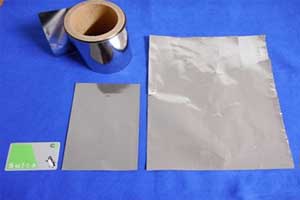 Energy-saving benefits expected in a wide variety of devices through substituting magnetic steel sheets.
Subscribe to:
Posts (Atom)