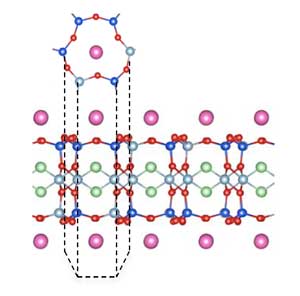
 Researchers discovered that atomically thin micas - the name given to a type of common mineral found in soil - are excellent proton conductors. This surprising result is important for the use of 2D materials in applications such as fuel cells and other hydrogen-related technologies.

Monday, September 2, 2019
Atomically thin minerals show promise as proton conducting membranes for green technologies
Researchers discovered that atomically thin micas - the name given to a type of common mineral found in soil - are excellent proton conductors. This surprising result is important for the use of 2D materials in applications such as fuel cells and other hydrogen-related technologies.

Left or right? Novel algorithm takes chirality determination to the next level
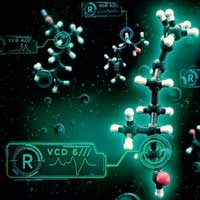 Chemists have significantly improved the experimental determination of the chirality or 'handedness' of molecules using vibrational circular dichroism (VCD) spectroscopy.
Direct microscopy imaging reveals details in DNA origami nanostructures
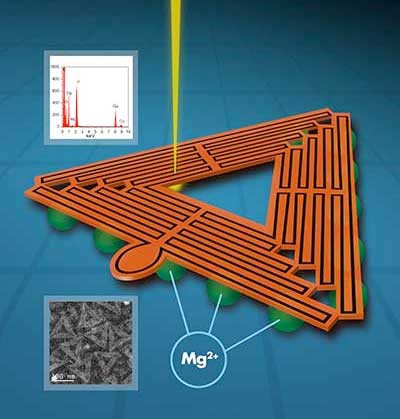 Scientists are now able to see greater details of DNA origami nanostructures, which will lead to a greater understanding and control of their assembly for future applications.
Single atoms as catalysts
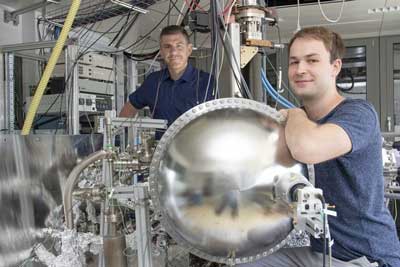 Incorporating individual metal atoms into a surface in the right way allows their chemical behavior to be adapted. This makes new, better catalysts possible.
Friday, August 30, 2019
Particles moving faster in a crowd
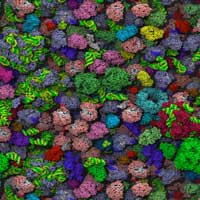 Cell particles move more quickly through a crowded cellular environment when the crowding molecules are non-uniformly distributed.
Ultrathin 3-D-printed films convert energy of one form into another
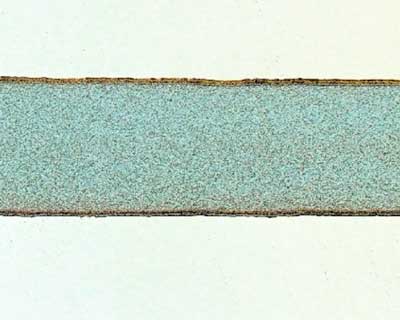 Low-cost piezoelectric films produce voltage when under strain, could be used for flexible electronic components and more.
A new model of heat transfer in crystals
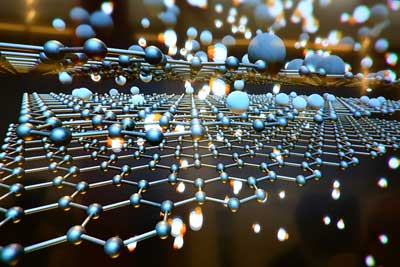 Scientists suggested a model describe the distribution of heat in ultrapure crystals at the atomic level.
Subscribe to:
Posts (Atom)