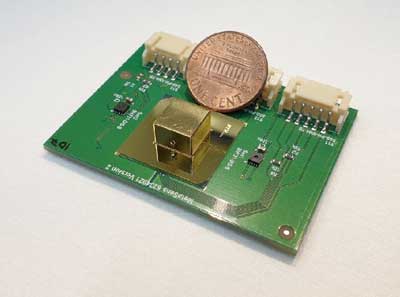
 Researchers developed the first fully-integrated, non-dispersive infrared (NDIR) gas sensor enabled by specially engineered synthetic materials known as metamaterials. The sensor has no moving parts, requires little energy to operate and is among the smallest NDIR sensors ever created.

Thursday, August 29, 2019
Researchers demonstrate first all-metamaterial optical gas sensor
Researchers developed the first fully-integrated, non-dispersive infrared (NDIR) gas sensor enabled by specially engineered synthetic materials known as metamaterials. The sensor has no moving parts, requires little energy to operate and is among the smallest NDIR sensors ever created.

Smarter experiments for faster materials discovery
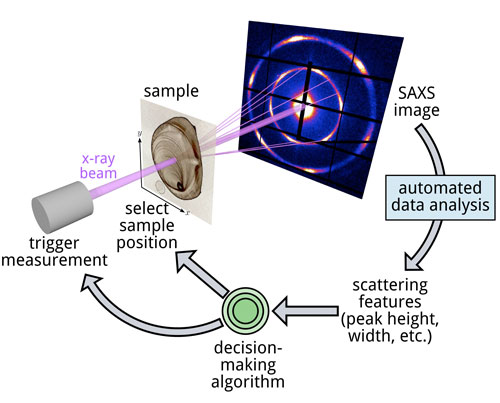 Scientists created a new AI algorithm for making measurement decisions; autonomous approach could revolutionize scientific experiments.
Directional plasmon excitation at molecular scales
 Scientists have developed a method for directional excitation of plasmons at molecular length scale with electrically driven sources.
Atomically packed boundaries resist cracking
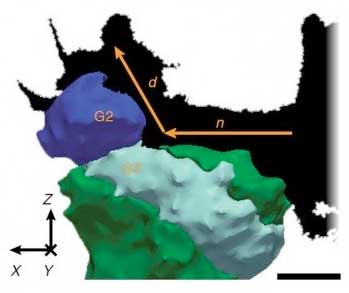 Researchers used high energy X-rays to image the crack and also the grains inside a material in terms of size, shape, and position. Importantly, the new advances also determine the crystallographic orientation of the atomic arrangements in each grain.
Theory reveals the nature of crystals defects (of silicon carbide)
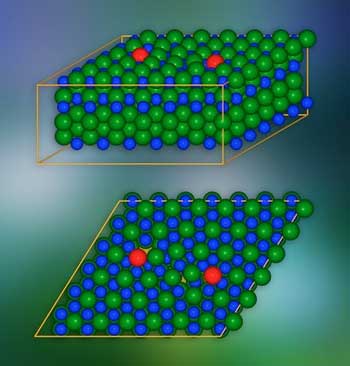 Imperfections of crystal structure, especially edge dislocations of an elongated nature, deeply modify basic properties of the entire material and, in consequence, drastically limit its applications. Using silicon carbide as an example, physicists have shown that even such computationally demanding defects can be successfully examined with atomic accuracy by means of a cleverly constructed, small in size, model.
Engineers build advanced microprocessor out of carbon nanotubes
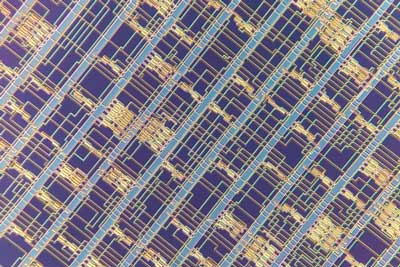 New approach harnesses the same fabrication processes used for silicon chips, offers key advance toward next-generation computers.
Nanostructured beetle scales hold secret to creating sustainable paint from recycled plastic
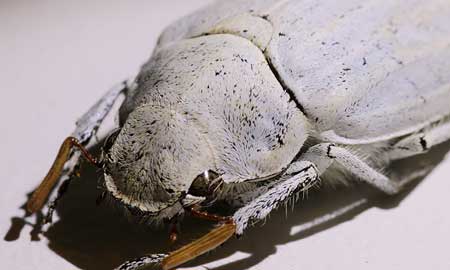 The structure of ultra-white beetle scales could hold the key to making bright-white sustainable paint using recycled plastic waste, scientists have discovered.
Subscribe to:
Posts (Atom)