
Friday, February 22, 2019

Magnetization reversal achieved at room temperature using only an electric field

Scientists achieved magnetization reversal in cobalt-substituted bismuth ferrite by applying only an electric field. Such an effect had been sought after for over a decade in order to make new types of low-power-consumption magnetic memory devices.

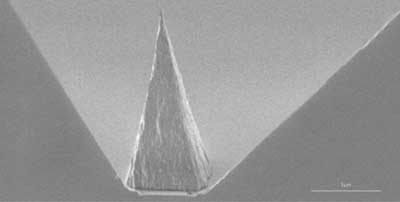
A tip for future nanoscale sensing

The tiny diamond pyramid tips used for atomic force microscopy may also prove to be highly useful for nanoscale, quantum sensing.

Thursday, February 21, 2019

With nanopore sensing, physicists detect subtle changes in single particles
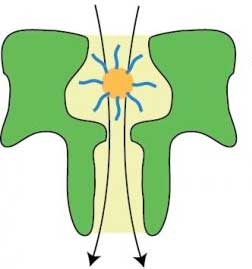
The researchers' findings open the door to observe all kinds of interesting phenomenon on nanosurfaces, an area of great interest to chemists.

More flexible nanomaterials can make fuel cell cars cheaper

A new method of increasing the reactivity of ultrathin nanosheets, just a few atoms thick, can someday make fuel cells for hydrogen cars cheaper.

Design principles for disease-sensing nanomaterials
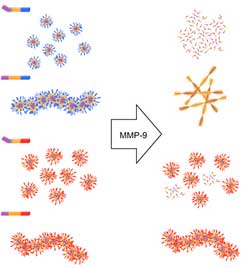
The detailed findings in a new paper could lead to more precise, effective methods of treating and diagnosing a variety of diseases, including cancers.

Gold nano-stars for intracellular delivery
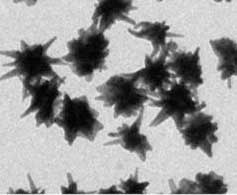
Researchers have developed a new method for star-shaped nanoparticles synthesis based on laser irradiation. A wide range of customizable conditions provides an opportunity to create comfortable environment for various substances delivery to different types of cells.

Carbon nanotubes can be produced in a new way by twisting ribbon-like graphene
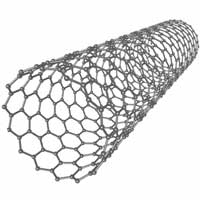
Researchers utilized symmetry, a time-worn concept of theoretical physics, to develop an effective method to run computer experiments on nanostructures under complex deformations.