
Thursday, January 17, 2019

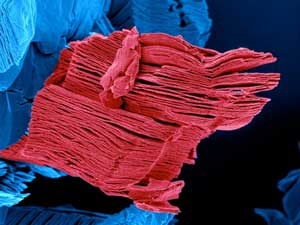
MXene researchers find 2-D transition-metal carbides react with water, opening a door to their unknown chemistry

Researchers have discovered that 2-D titanium carbide materials, or MXenes, can react with water without the presence of other oxidizers. Their finding may lead to new insights into the unusual chemistry of MXenes and consequently, have impacts on MXenes? storage and device manufacturing.

New light shed on organic polymer PEDOT
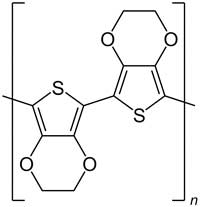
The organic polymer PEDOT is probably one of the world?s most intensely studied materials. Despite this, researchers have now demonstrated that the material functions in a completely different manner than previously believed. The result has huge significance in many fields of application.

Wednesday, January 16, 2019

Peering into the mist: How water vapor changes metal at the atomic level
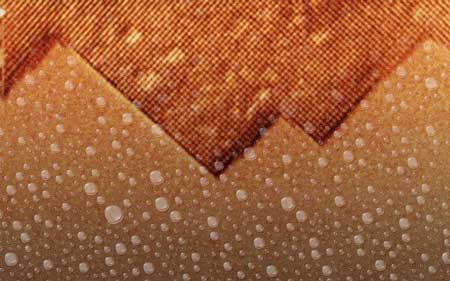
New insights into molecular-level processes could help prevent corrosion and improve catalytic conversion.

Just like flipping a switch - in only half a picosecond
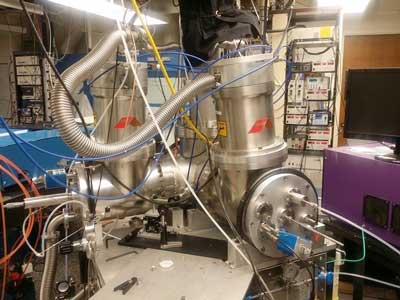
Researchers discover molecules ?spin flip? from magnetic to non-magnetic forms dynamically.

Graphene's versatility extends to space applications
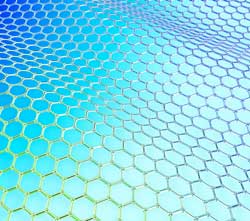
In an ingenious set of experiments, scientists have tested graphene under microgravity conditions for the first time. The exciting results provide a valuable foundation for developing graphene devices for use in space.

Understanding insulators with conducting edges
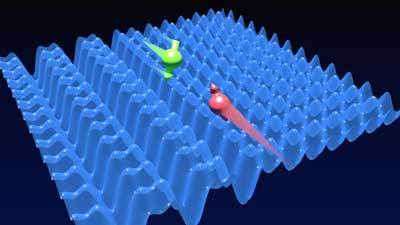
Theoreticians investigate puzzling phenomenon in a quantum gas.

Novel viral identification method developed
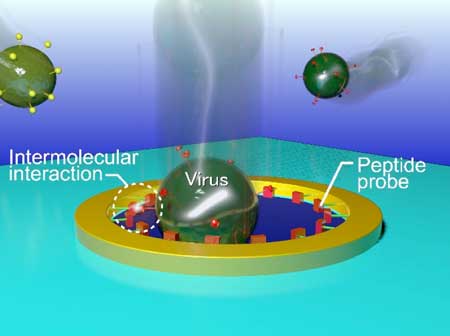
Researchers create a new nanodevice for influenza virus typing at the single-virion level by combining a nanopore sensor with peptide engineering.