
Friday, November 30, 2018

X-rays reveal the workings of batteries

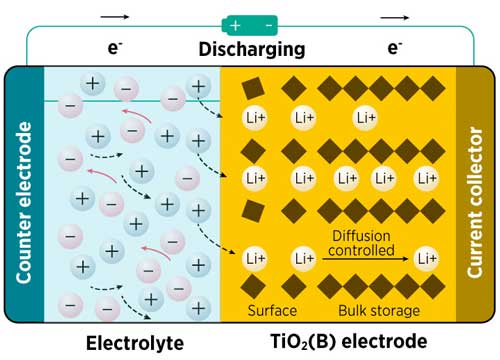
An X-ray analysis reveals the charging mechanism of a promising electrode material.

More sensitive MRI diagnostics thanks to innovative 'elastic' contrast media
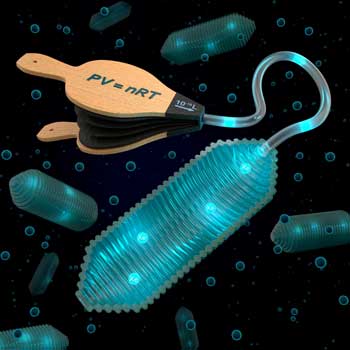
Researchers have found a new method for obtaining high-quality images in magnetic resonance imaging (MRI), that requires less contrast medium compared to current methods. It is made possible by using an "elastic" protein structure that can absorb dissolved xenon in a self-regulating way.

Surface of ultra-smooth nanomaterial steeper than Austrian Alps

Scientists have measured an ultrananocrystalline diamond coating, prized for its hard yet smooth properties, and showed that it is far rougher than previously believed.

Atomic nitrogen route to new 2D semiconductors
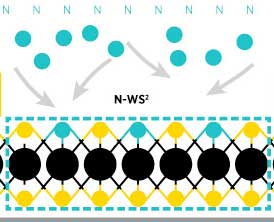
A technique for making ultrathin, two-dimensional films of tungsten disulfide could underpin next-generation electronic and optoelectronic technologies.

On the cusp of valleytronics

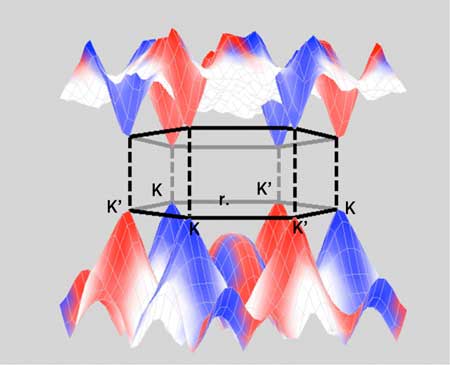
Emerging valleytronics technology using 2D materials promises smaller devices that chew up less energy and transmit data faster and more securely.

Probing structural changes in electroactive self-assembled monolayers
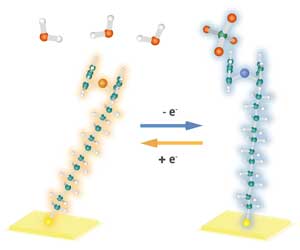
A powerful method is demonstrated for analyzing the electrochemically induced electronic-state and structural changes that occur in an iron-tipped self-assembled monolayer.

Thursday, November 29, 2018

Light triggers gold nanoparticles in unexpected way
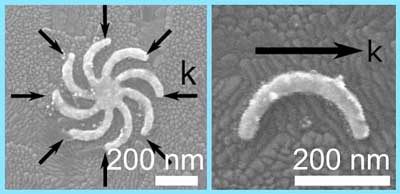
Researchers have discovered a fundamentally different form of light-matter interaction in their experiments with gold nanoparticles.