
Monday, October 8, 2018

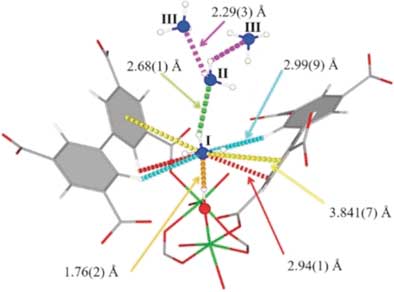
A MOF rack for ammonia

Metal?organic framework as a robust material for the uptake and storage of ammonia at densities that come close to that of the liquefied gas.

Graphene controls surface magnetism at room temperature

Researchers found that the proximity effects of graphene on a magnetic semiconducting substrate affect the substrate's magnetism down to several layers below the surface.

Saturday, October 6, 2018

Novel method determines catalytic active sites using carbon nanotubes
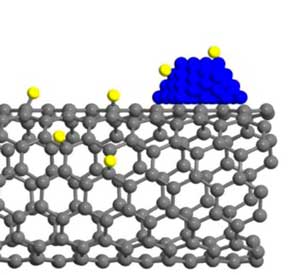
Catalytic research has developed a new and more definitive way to determine the active site in a complex catalyst.

Friday, October 5, 2018

Nanopore technology with DNA computing easily detects microRNA patterns of lung cancer
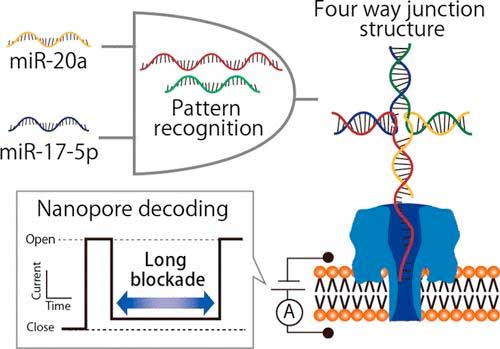
Researchers have developed a simple technique that allows detection of two independent microRNAs as an early diagnosis marker of Small Cell Lung Cancer , which is very aggressive. In this technique, they combined nanopore and DNA computing technologies as rapid and label-free detection.

Nanoscale pillars as a building block for future information technology
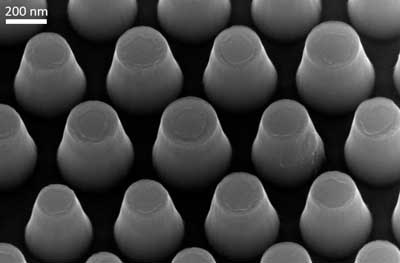
Researchers propose a new device concept that can efficiently transfer the information carried by electron spin to light at room temperature - a stepping stone towards future information technology.

Atomically thin, part-organic semiconductor for bendable phones

Engineers have invented a semiconductor with organic and inorganic materials that can convert electricity into light very efficiently, and it is thin and flexible enough to help make devices such as mobile phones bendable.

Flexible piezoelectric acoustic sensors for speaker recognition (w/video)

Researchers fabricated a flexible piezoelectric membrane by mimicking the basilar membrane in the human cochlear. Resonant frequencies vibrate corresponding regions of the trapezoidal piezoelectric membrane, which converts voice to electrical signal with a highly sensitive self-powered acoustic sensor.