
Thursday, October 4, 2018

Making a movie of nanocrystals' structural evolution

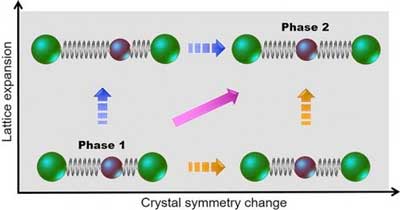
Combined ultrafast snapshots suggest that the crystal symmetry of copper sulfide nanocrystals changes due to interactions between electrons and atoms vibrating in the crystal lattice - an understanding of which could help scientists optimize the functionality of superconductors, magnetic materials, and other strongly correlated systems.

Extracting energy from a 60 nanometers thin layer
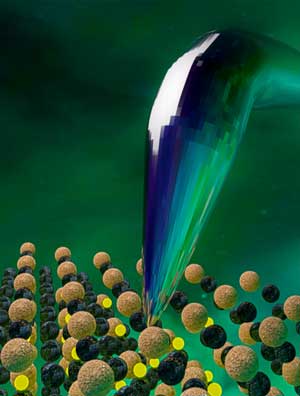
Scientists have demonstrated the viability of the direct piezoelectric effect in a thin film bismuth ferrite material for the first time.

Nanostructured coatings deliver killing touch for bacteria

Tiny zinc oxide-based spikes that mimic natural antibacterial coatings puncture and damage microbial cell walls via oxidation.

Measuring microviscosity inside cells

A rotating fluorescent molecule that stays brighter in more viscous environments could shed light on the inner workings of the cellular environment.

Toughening up polymers with nanoparticles

Adding nanoparticles to a polymer matrix enhances the thermo-mechanical properties of the materials.

Wednesday, October 3, 2018

A new brain-inspired architecture could improve how computers handle data and advance AI

Researchers designed a new computer architecture with co-located memory and processing. In studies, their prototype ran 200 times faster than conventional computers.

Flowing salt water over this super-hydrophobic surface can generate electricity

Engineers have developed a super-hydrophobic surface that can be used to generate electrical voltage. When salt water flows over this specially patterned surface, it can produce at least 50 millivolts.