
Wednesday, September 26, 2018

Oxygen vs. nanochip: Scientists show vulnerability of a promising 2D semiconductor to air

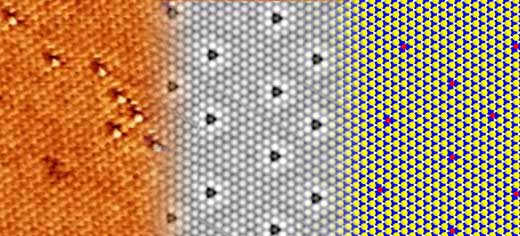
Researchers have managed to trace in details the structural changes of two-dimensional molybdenum disulfide under long-term environmental impact. The new data narrows the scope of its potential application in microelectronics and at the same time opens up new prospects for the use of two-dimensional materials as catalysts.

Study demonstrates new mechanism for developing electronic devices

Scientists have demonstrated a new mechanism that can potentially allow the control of electrons on the nanometer spatial scale and femtosecond temporal scales using light.

Tuesday, September 25, 2018

Multimodal imaging shows strain can drive chemistry in a photovoltaic material
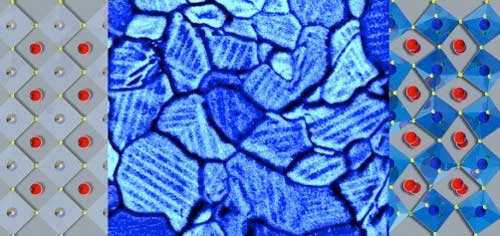
A unique combination of imaging tools and atomic-level simulations has allowed researchers to solve a longstanding debate about the properties of a promising material that can harvest energy from light.

Chemical engineers functionalize boron nitride with other nanosystems
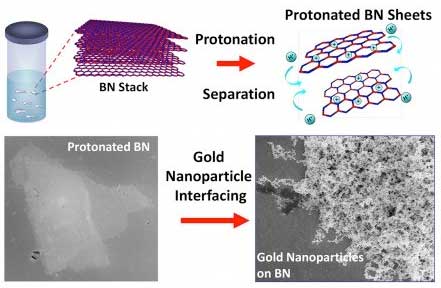
Researchers unlock potential for improving composite material.

Heterometallic copper-aluminum super atom discovered

On the outside, the cluster made of 55 copper and aluminum atoms looks like a crystal, but chemically it has the properties of an atom. The heterometallic superatom provides the prerequisites for developing new, more cost-effective catalysts.

A nanoglazed facade that is a power plant and a guarantee

A new building facade produces more energy than the unit needs over the course of the year.

Study of tiny vortices could lead to new self-healing materials, other advances
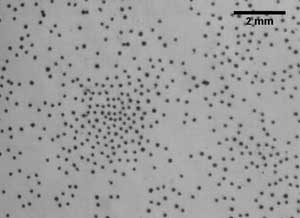
Scientists hope that tiny vortices, driven by various magnetic fields, will be able to move microscopic particles.