
Tuesday, September 18, 2018

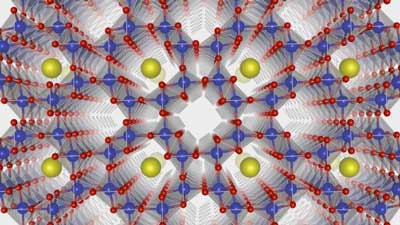
Scientists use artificial neural networks to predict new stable materials

Predicting the stability of materials is a central problem in materials science, physics and chemistry. Now, researchers are training artificial neural networks to predict new stable materials.

Nanomembranes turn your skin into a loudspeaker
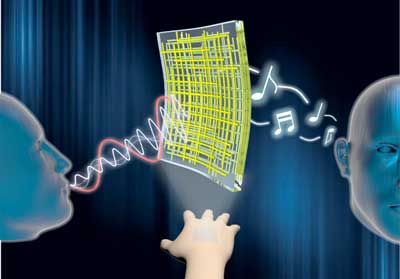
Researchers haev developed ultrathin, transparent, and conductive hybrid nanomembranes with nanoscale thickness. They demonstrated their nanomembrane by making it into a loudspeaker that can be attached to almost anything to produce sounds.

Extremely small and fast: Laser ignites hot plasma
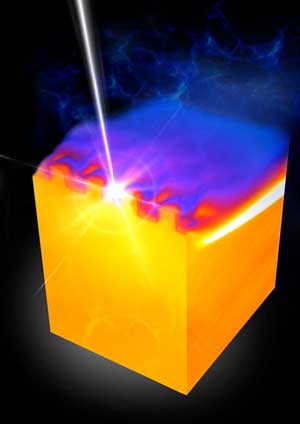
Physicists observe plasma acceleration with unprecedented precision at the nanoscale.

Greater than the sum of its parts

Scientists are combining existing theories to form a more general theory of electrochemistry that predicts unexplained behavior.

Sophisticated nanostructure for solar cells: Rough optics, smooth surface
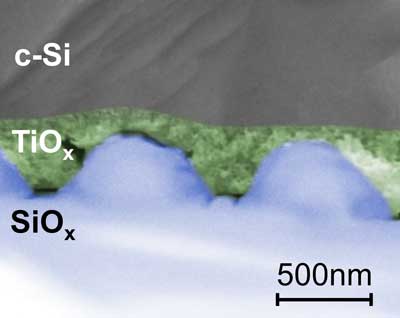
Thin-film solar cells made of crystalline silicon are inexpensive and achieve efficiencies of a good 14 percent. However, they could do even better if their shiny surfaces reflected less light.

Clarified why some nanoparticles pass through nanopores whereas other smaller ones do not

A study has determined the link between the size and elasticity of soft nanoparticles which allows them to translocate or otherwise.

Modeling crystal behavior: Towards answers in self-organization
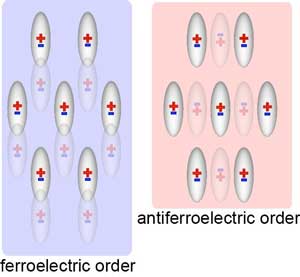
Researchers have created a model based on the conflict between different lattice interactions.