
Wednesday, August 29, 2018

Friction loss at first contact: The material does not forgive

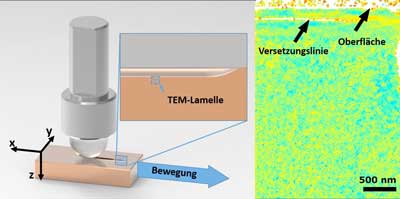
The exact cause of wear is still unclear. Scientists recently proved that the effect occurs at the first contact already and always takes place at the same point of the material. Their findings help develop optimized materials and reduce consumption of energy and raw materials.

Environmentally friendly photoluminescent nanoparticles for more vivid display colors
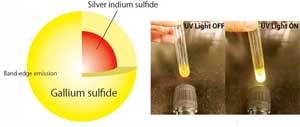
Researchers created a new type of light-emitting nanoparticle that is made of ternary non-toxic semiconductors to help create displays and LED lighting with better colors that are more environmentally friendly.

Watching 2D materials grow

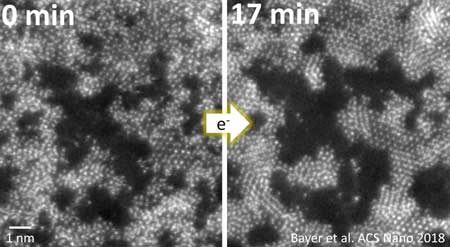
Atomically thin crystals will play an ever greater role in future -- but how can their crystallisation process be controlled? A new method is now opening up new possibilities.

Science behind world's lightest graphene watch revealed

The RM 50-03 watch was made using a unique composite incorporating graphene to manufacture a strong but lightweight new case to house the watch mechanism which weighed just 40 grams in total, including the strap.

Tuesday, August 28, 2018

All that is (nano)gold is not biochemically stable
Researchers stumble upon the lesson that typically stable gold nanoparticles can't always be trusted.

Electric polarization in the macroscopic world and electrons moving at atomic scales
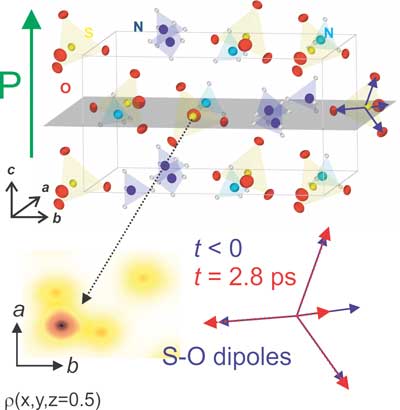
Femtosecond x-ray experiments in combination with a new theoretical approach establish a direct connection between electric properties in the macroscopic world and electron motions on the time and length scale of atoms. The results open a new route for understanding and tailoring the properties of ferroelectric materials.

Nanocrystals pave the way for new design of digital devices
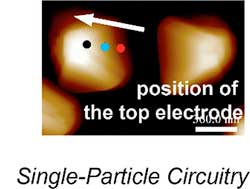
Researchers have developed a tiny electrical circuit that may enable an entirely new design of digital devices.