
Tuesday, May 29, 2018
Better, faster, stronger: Building batteries that don't go boom
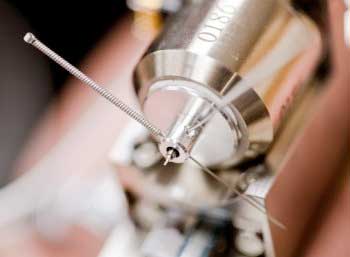
Understanding how lithium reacts to pressure developed from charging and discharging a battery could mean safer, better batteries.

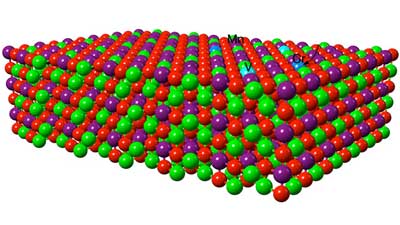
Researchers predict materials to stabilize record-high capacity lithium-ion battery
Advancement could pave the way for less expensive, longer-lasting batteries for electric vehicles.
Researchers use silicon nanoparticles for bioimaging and drug delivery
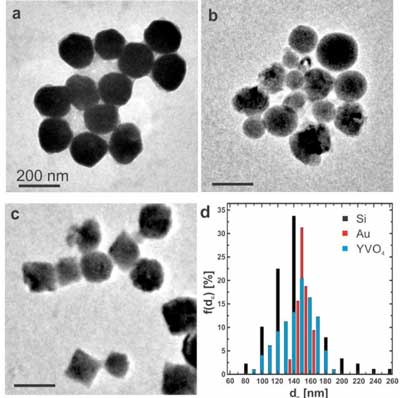
An international research team has studied a new cell visualisation and drug delivery system based on nanoparticles coated with luminescent dye molecules.
Graphene layered with magnetic materials could drive ultrathin spintronics
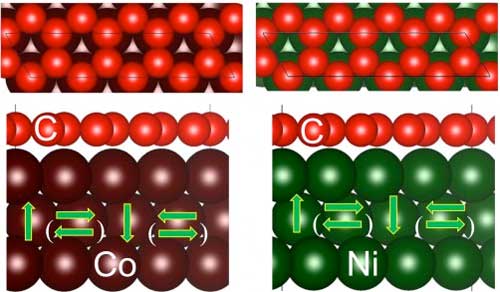
Measurements reveal exotic spin properties that could drive new form of data storage.
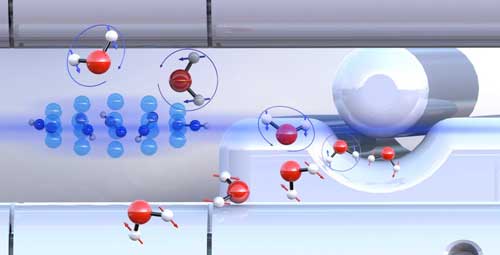
Water is not the same as water
Water molecules exist in two different forms with almost identical physical properties. For the first time, researchers have succeeded in separating the two forms to show that they can exhibit different chemical reactivities.
How to code a functional molecular machine?
An international team has developed a model that simulates protein evolution. Starting from stiff, unfunctional proteins, the computer model shows how evolving protein components can work together to give rise to dynamic and efficient molecular machines.
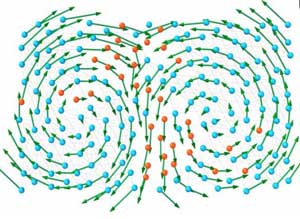
Switched on: a breakthrough for spintronics
Scientists have discovered a switch to control the spin current, a mechanism needed for information processing with full spin-based devices.
Subscribe to:
Posts (Atom)