
Friday, April 13, 2018
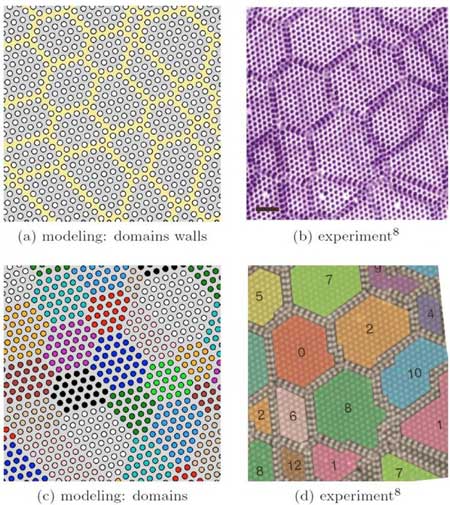
Similar charges are attracted to each other
Scientists have finally found out why a material that could potentially become the basis for ultra-fast memory in new computers is formed.

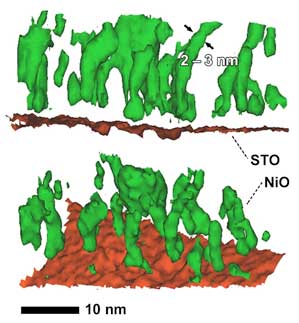
Oxide separation anxiety
Interface interactions delay phase separation in oxide thin films, suggesting new ways to control crystal growth.
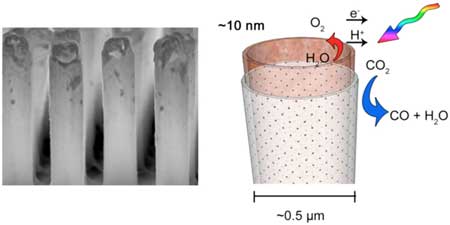
A core-shell nanotube array for artificial photosynthesis
Researchers have developed a fabrication method to make a square-inch sized artificial photosystem, in the form of an inorganic core-shell nanotube array.
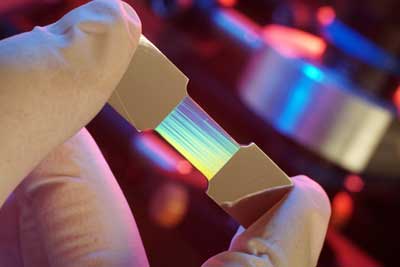
Tiny structures - huge impact
The surface of materials can have an enormous influence on their function. If the external properties are changed, this also expands the range of possible applications. This is why materials scientists are researching how they can tailor the surfaces of different materials using laser technology.
Observing biological nanotransporters
Scientists describe with atomic detail how molecules are transported through biological membranes. Computer simulations and spectroscopic experiments provided insights into the work of so-called ABC transporters.
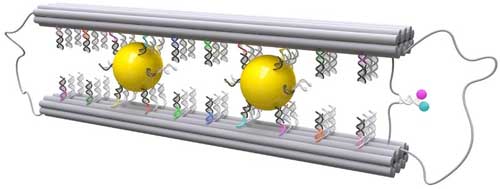
Mimicking nanoscale natural movements with the help of DNA origami
Researchers use a technique called DNA origami to mimic a multitude of vital movements seen in nature, such as the sliding motion exerted by protein motors during cell division. Their invention features a preliminary attempt to construct nanoscale analogues of the mysterious natural machines in living cells.
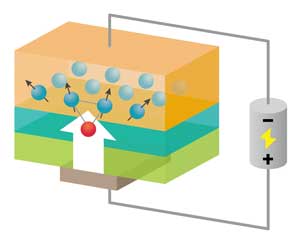
Anomalous and topological Hall effects can be controlled by an electric field
Controlling the anomalous and topological Hall effects by applying an electric field could lead to new types of memory and logic devices.
Subscribe to:
Posts (Atom)