
Thursday, April 12, 2018
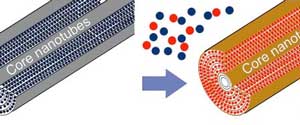
Mechanism of oxidative unzipping of multiwall carbon nanotubes to graphene nanoribbons
Researchers demonstrate that the oxidative unzipping of MWCNTs is intercalation-driven, not oxidative chemical-bond cleavage as was formerly proposed. The unzipping mechanism involves three consecutive steps: intercalation-unzipping, oxidation, and exfoliation.

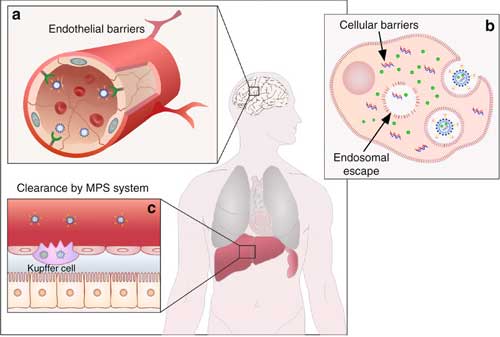
How advanced nanotechnology can improve cancer care
Researchers discuss untapped potential of targeted nanocarriers to revolutionize cancer therapy.
Researchers find combination for small data storage and tinier computers
It may sound like a futuristic device out of a spy novel, a computer the size of a pinhead, but according to new research, it might be a reality sooner than once thought.

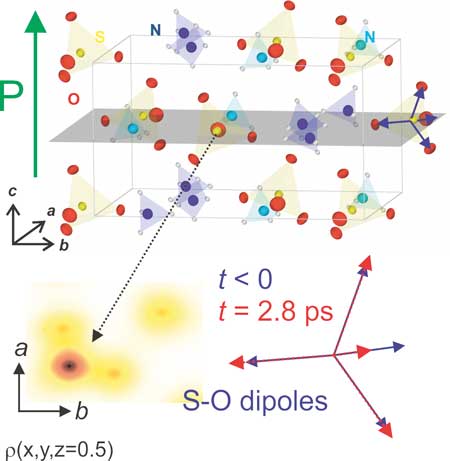
Wiggling atoms switch the electric polarization of crystals
A time-resolved x-ray experiment elucidates that tiny atomic vibrations shift negative charges over a 1000 times larger distance between atoms and switch the macroscopic polarization on a time scale of a millionth of a millionth of a second.
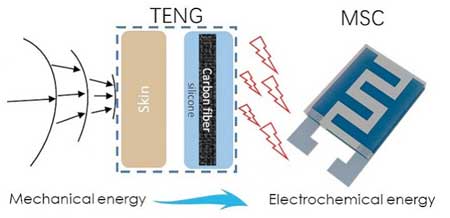
Nanotechnology wearable self-charging power units
Researchers have developed small standalone devices by integrating maintenance-free power units that produce and use their own fuel instead of relying on an external power source.
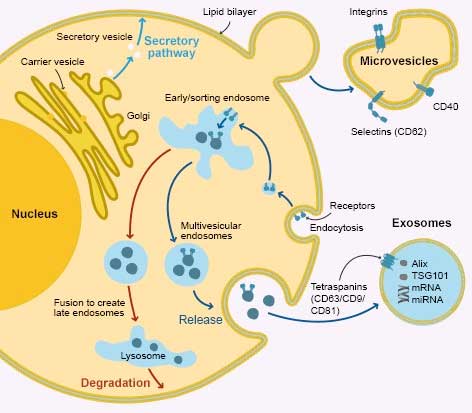
Scientists unlock path to use cell's own nanoparticles as disease biomarkers
Extracellular vesicles can now be identified at the individual level.
The future of ultrafast solid-state physics
In a new paper, scientists assess the current state of the field of ultrafast physics and consider its implications for future technologies.
Subscribe to:
Posts (Atom)